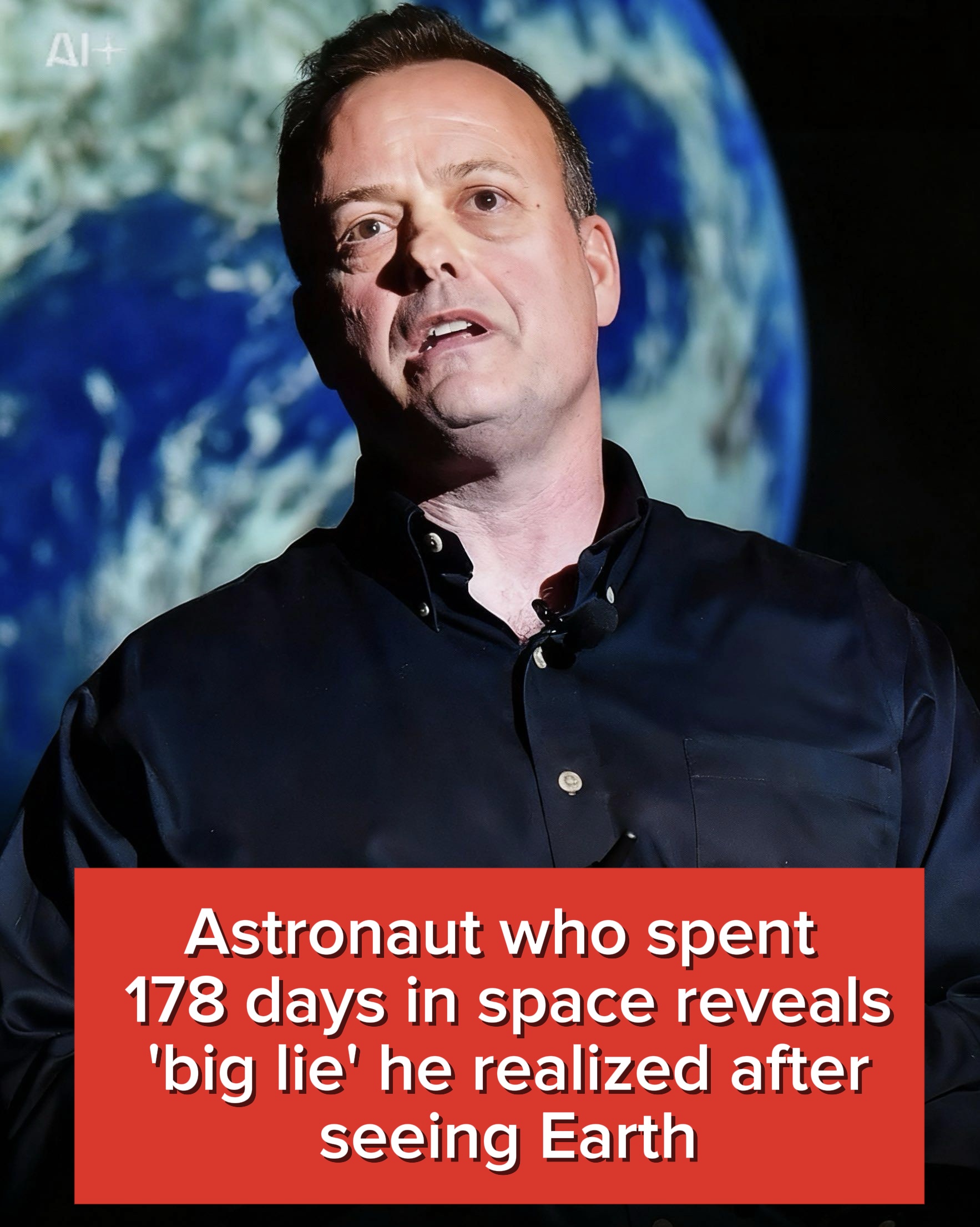
A former NASA astronaut who spent nearly six months in space has opened up about a profound truth he realized while orbiting our planet.
Ron Garan, who spent a total of 178 days in space, has spoken about how viewing Earth from the International Space Station gave him a drastically different perspective on life on our planet. See More…
Garan, a former U.S. Air Force pilot and NASA astronaut, has been on multiple space missions — including long stints aboard the ISS and spacewalks — accumulating more than 71 million miles in orbit.
A New View of Earth
While looking down at Earth from space, Garan described seeing atmospheric phenomena such as lightning storms and auroras, as well as the remarkably thin layer of atmosphere that protects all life. But what struck him most was what he didn’t see: the things people on Earth tend to obsess over, such as economic systems and political divisions.
Instead, the planet appeared to him as one interconnected biosphere — a living organism without visible borders — floating in the darkness of space. This view, often referred to as the “overview effect” by astronauts and scientists, can drastically change how people think about humanity and Earth.
“Living a Lie”
Garan said the insight he gained was that people on Earth are “living a lie” — because most of us think in terms of separate nations, economies, and societies, rather than as part of one shared planetary system.
He explained that on Earth, human‑made systems tend to treat everything — including the life‑support systems of the planet — as if they were entirely subordinated to economic interests. But from space, that perspective disappears, revealing how fragile and interconnected everything truly is.
That sobering realization makes it clear that many of the problems we face — climate change, deforestation, loss of biodiversity — aren’t isolated issues but symptoms of a deeper misunderstanding of our place on this planet,” he said.
A Call for Change
Based on his experience, Garan believes that society needs to rethink its priorities, placing planet first, then society, and finally economy — instead of the other way around. Only then, he argues, can humanity move forward and address the fundamental challenges it faces.
He has shared this message in interviews, talks and public appearances, encouraging people to adopt a more planetary perspective — one that recognizes how interconnected and interdependent humanity truly is.
Leave a Reply