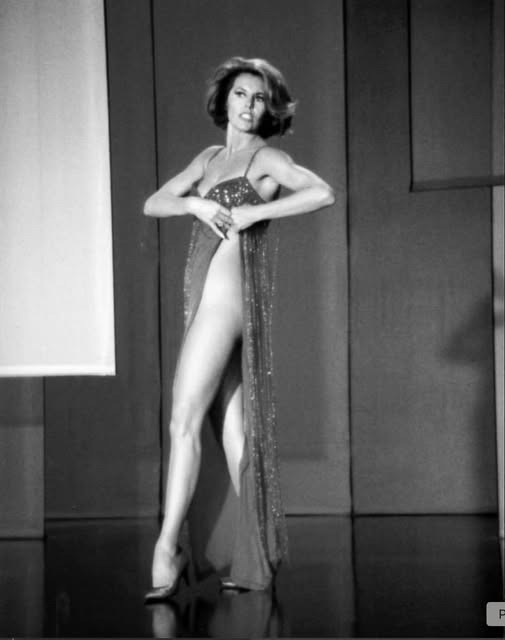
Cyd Charisse wasn’t born a Hollywood goddess. She entered the world in Amarillo, Texas, in 1922 as Tula Ellice Finklea—a child weakened by polio before age six. Doctors prescribed ballet to rebuild her strength. They couldn’t have known those careful exercises would launch one of cinema’s most unforgettable dancers. “Cyd” came from her brother’s lisped “Sis,” and the name stuck as she transformed from frail girl to magnetic performer.
Dance gave her power and escape. By her teens she was training in Los Angeles with Russian masters, her technique honed and elegant. Hollywood noticed before she ever spoke on camera. MGM signed her in the 1940s; by the early 1950s she was the studio’s shimmering secret weapon. Her breakthrough came in Singin’ in the Rain (1952) in the “Broadway Melody” ballet with Gene Kelly. In a slinky green dress, she didn’t say a word—she didn’t need to.
A glance, a stillness, and a whip-sharp leg told the story. With Kelly she was cool precision; with Fred Astaire she radiated lyricism. Their Band Wagon number “Dancing in the Dark” remains one of film’s most romantic dances—two bodies speaking without words. Offscreen she was grounded, private, and devoted to singer Tony Martin, her husband of sixty years.Tragedy touched her life, yet she moved with quiet resilience, later mentoring young dancers. Honored with the National Medal of Arts in 2006, she died in 2008 at 86. Charisse didn’t just master movement—she turned recovery into art, proving elegance can be powerful, fierce, and human. When she danced, she didn’t follow the music—she became it
Leave a Reply