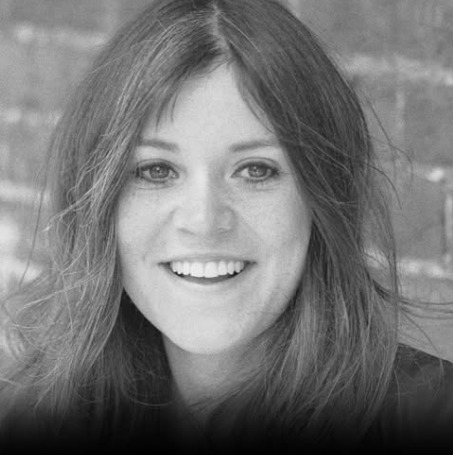
August 1969. Melanie Safka was riding in her mother’s car through upstate New York, staring out the window, watching countryside rush past. Her record label had described her destination as a modest arts fair. Maybe some craft booths. Maybe a small music stage. Then she saw a helicopter hovering low over a distant hill — and below it, not farmland, but people. More people than she had ever seen gathered in one place in her life. A vast, breathing sea of humanity stretching farther than her eyes could follow. She had stumbled into Woodstock. She was 22 years old. She had no confirmed slot. No plan. No safety net. Just a guitar, one song with modest attention overseas, and the audacity to show up. Backstage was a different world entirely — Jimi Hendrix, Janis Joplin, The Who, Joan Baez. Legends. Melanie was placed alone in a small tent, separated from all of it, waiting. Hours passed. Someone would appear at the canvas flap: “You’re on next.” Then disappear. Then more hours. “You’re on next.” Again and again, until the anxiety had settled so deep in her chest that her throat began to close. A harsh cough took hold — so bad she genuinely feared she wouldn’t be able to sing at all. That’s when Joan Baez noticed. Without announcement or fanfare, Joan sent tea and honey to the tent where the frightened young singer was waiting. No cameras. No credit. Just a superstar seeing a terrified nobody — and quietly offering kindness. Melanie later said that moment meant more to her than almost anything else that weekend.See more…
Then the weather turned. Rain slammed the stage. Instruments were at risk. Famous acts backed out of the storm one by one. The carefully planned schedule collapsed. The organizers needed someone willing to walk into it alone. They chose the unknown girl. At approximately 3:30 AM on Sunday morning — the graveyard shift, when exhaustion had settled like fog over half a million people — Melanie Safka walked out onto the Woodstock stage. No band. No backup. No shelter from the rain. Just herself, an acoustic guitar, and a folding metal chair. She sat down in her loose red tunic, settled the guitar into her lap, and began to sing. She sang “Beautiful People.” She sang “Birthday of the Sun.” She sang “Mr. Tambourine Man.” As she played, members of the Hog Farm commune — the group providing medical support and security throughout the weekend — moved through the soaked crowd handing out candles. Practically, the goal was simple: help people see in the darkness, prevent injuries in the mud. But something else happened. One flame caught. Then another. Then dozens. Then hundreds. Then thousands. The muddy hillside began to glow. From the stage, Melanie watched something come into existence that had never existed before. Half a million people, holding candles, swaying together in the rain and the dark. Strangers becoming one living, breathing constellation of light — not because anyone planned it, not because anyone announced it, but because a frightened young woman sat down alone in a storm and sang honestly. A ritual was being born that night. And no one knew it yet. She arrived at Woodstock anonymous. She left unforgettable.
The image never left her. The firelight reflecting off rain-soaked faces. The way individual flames became something larger than any one of them. The feeling of connection igniting spontaneously out of nowhere. From that night came “Lay Down (Candles in the Rain)” in 1970 — featuring the Edwin Hawkins Singers, capturing the spiritual intensity of what she’d witnessed. It broke into the Top 10 and brought her the mainstream success she had never planned for. Then in 1971 came “Brand New Key.” A bouncy, seemingly innocent song about roller skates, written in 15 minutes. It went straight to #1. Sold over 3 million copies. And was immediately banned by radio stations who insisted the key and lock imagery was sexual innuendo. Melanie was genuinely baffled. “It’s about roller skating,” she protested, to increasingly loud laughter across the country. The controversy made it irresistible. Everyone wanted to hear the scandalous song the sweet folk singer kept insisting was innocent. But success brought pressure. Labels wanted to package her, predict her, sand down everything that made her distinctly herself into something more commercially comfortable. Melanie refused.
She walked away from Columbia Records. When Buddah Records tried to turn her into a novelty act, she pushed back. And then, with her husband and producer Peter Schekeryk, she did something almost no woman in music had ever done: she founded her own independent label, Neighbourhood Records — taking ownership of her masters, her releases, her artistic direction, at a time when the industry simply did not offer women those options. She didn’t wait to be given power. She built it herself. Over the next five decades, she released more than 30 albums. She earned an Emmy Award. She became a UNICEF Goodwill Ambassador. She was beloved across Europe — massive in the Netherlands, UK, and Germany — in ways American audiences never fully appreciated. She kept performing into her 70s, never retired, never accepted the idea that her moment had passed. When younger artists sought authenticity, they came to her. When festivals wanted meaning, they called her. She kept creating because she couldn’t imagine anything else.
Melanie Safka passed away on January 23, 2024, at age 76. She was working on her 32nd album when she died. Her family asked fans to honor her by lighting a candle. It was the only farewell that made sense. Because somewhere tonight — at an arena, at a stadium, at an outdoor festival under the stars — thousands of people are lifting their phones into the air during a song that matters to them. Tiny lights blooming in the darkness, strangers becoming one thing together for three minutes that they’ll carry home and remember. They don’t know it started on a rain-soaked hillside in 1969, with a terrified young woman alone on a metal chair, coughing through her fear, singing into a storm because there was nothing else left to do. But it did. Every raised light traces back to her. Every flicker in a dark arena. Every phone held above the crowd during a song that reaches somewhere too deep for words. She didn’t set out to make history. She showed up frightened, sat down, and sang anyway. And the world has been holding up lights ever since.
Leave a Reply