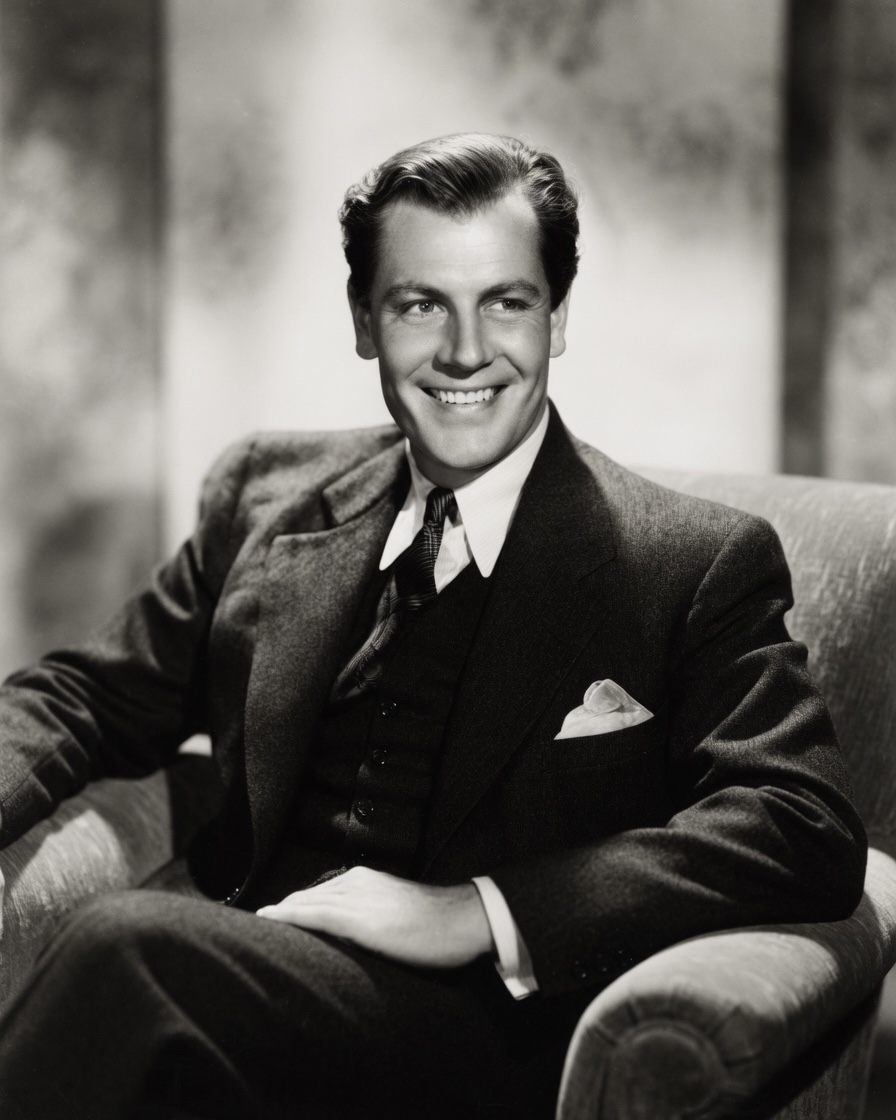
Joel McCrea was one of those rare Hollywood figures whose legacy was built not just on talent, but on character. Born in 1905, he became a defining face of Western cinema, known for portraying honest, grounded men in a time when Hollywood often leaned toward glamour and excess. While many actors chased fame in the spotlight, McCrea quietly built a career rooted in authenticity—both on and off screen.See More…
In the 1930s and 1940s, he worked with some of the most respected directors of the era, including Preston Sturges in Sullivan’s Travels. That role revealed something deeper about McCrea—he wasn’t just a cowboy hero, but an actor capable of emotional depth and self-awareness. Behind the scenes, however, he often turned down major roles that didn’t align with his personal values, a rare decision in an industry driven by ambition.
One lesser-known truth is that McCrea deliberately stepped away from high-paying, high-profile roles in order to focus on Westerns. At a time when many actors saw the genre as limiting, he saw it as honest storytelling. He believed Westerns reflected real American values—hard work, justice, and humility—and he refused to compromise that vision. This decision shaped his legacy as one of the most authentic Western stars of his generation.
Off-screen, McCrea lived a life that contrasted sharply with typical Hollywood lifestyles. He owned a vast ranch in California and spent much of his time working the land, often preferring it over film sets. Unlike many of his contemporaries, he avoided scandals, publicity stunts, and the party scene. Friends and colleagues described him as deeply principled, modest, and fiercely independent—qualities that only strengthened his image among fans.
Another “hidden” aspect of his life was his quiet philanthropy. McCrea was known to help struggling actors and crew members without seeking recognition. He also maintained strong family values, staying married to actress Frances Dee for decades—an unusually long and stable marriage in Hollywood. Their relationship became a symbol of loyalty in an industry often marked by instability.
When he passed away in 1990, it marked the end of an era. Yet his influence remains deeply felt, especially among audiences who value sincerity over spectacle. Joel McCrea wasn’t just a Western star—he was a man who lived by the same principles he portrayed on screen. And in a world that often rewards noise, his quiet strength continues to speak the loudest.
Leave a Reply