The opening of Tony Scott’s The Hunger is a masterclass in atmospheric dread. Amidst a thick haze of clove cigarette smoke and the rhythmic snap of a chain-link fence, the silhouette of David Bowie and Catherine Deneuve emerges into a subterranean club. Bauhaus is onstage, Peter Murphy’s jagged baritone delivering “Bela Lugosi’s Dead” from behind the bars of a cage. It was the moment the 1980s found its dark, visceral heartbeat—a departure from the decade’s neon-and-spandex clichés into a refined, nocturnal rebellion.See More…
Behind the lens, a creative collision was taking place that the mainstream wasn’t quite calibrated to handle. Susan Sarandon, playing the “bright-eyed” Dr. Sarah Roberts, brought a fierce, grounded intellect to a film that could have easily spiraled into gothic camp.
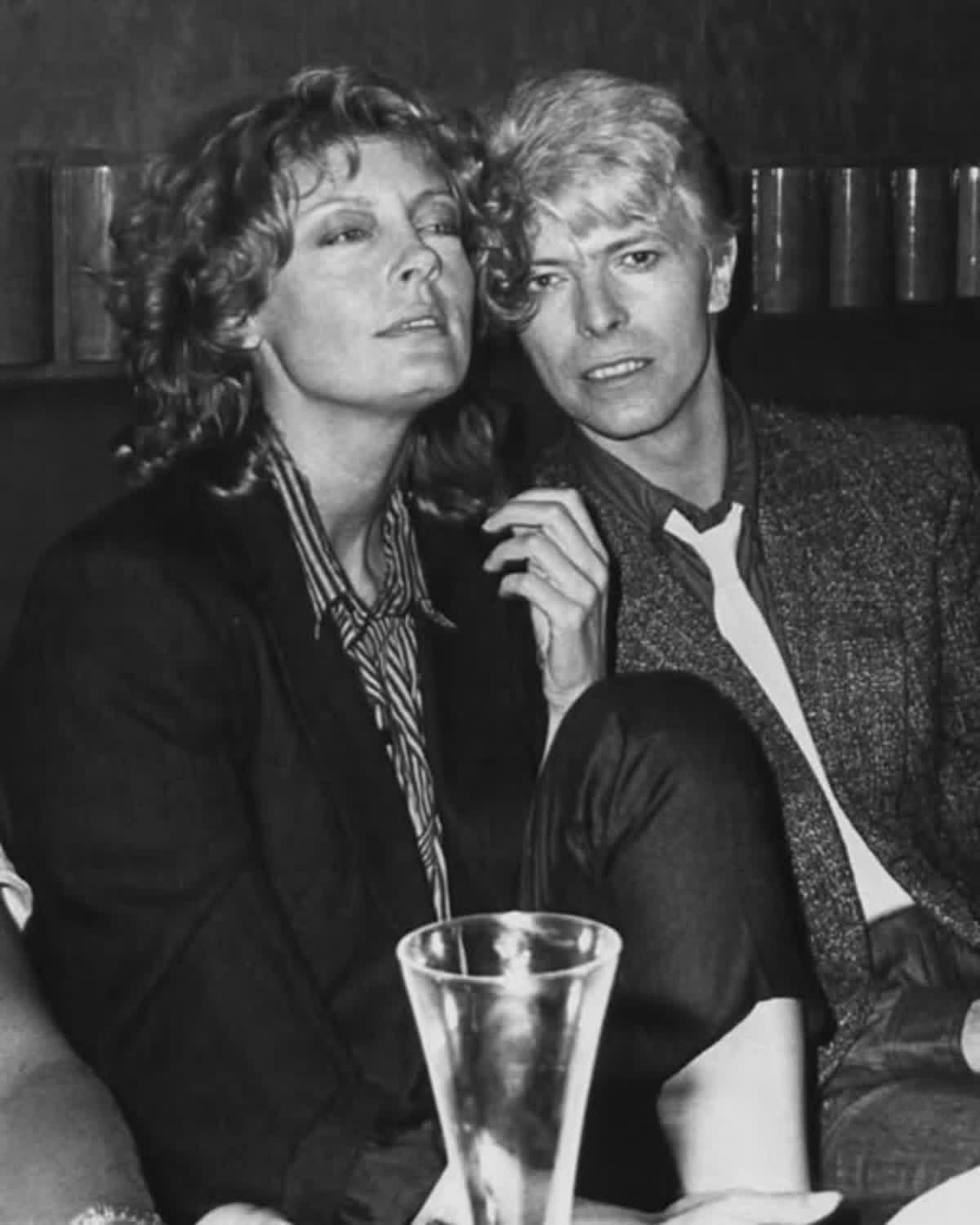
Her later admission that Bowie was “worth idolizing” wasn’t a starry-eyed confession; it was a mark of professional respect between two explorers who found a peer just as unfiltered and fearless as they were. For Bowie, 1983 was a year of staggering duality. He was the global pop juggernaut of Let’s Dance, yet on set in London, he was “unlearning” his idol status—miming Bach on a cello he actually learned to play for the role and enduring five hours of Dick Smith’s prosthetic aging.

His relationship with Sarandon became a quiet anchor, a shared high-end mystery that existed in the “coolest room in the house” while his fame was becoming stratospheric.

They eschewed the excess of the era for a European-influenced poise, a velvet-and-smoke aesthetic that remains a blueprint for the brave. In a world of loud, frantic celebrity, Sarandon and Bowie proved that real power couple energy isn’t about the headlines—it’s about the gravity of the intellectual crush. While their romantic chapter eventually closed, the legacy of their 1983 intersection haunts our culture like a persistent, sophisticated echo.
Leave a Reply