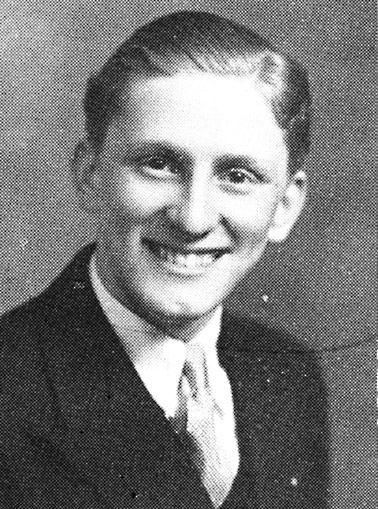
Long before he became the ultimate alpha male of Hollywood’s Golden Age, Kirk Douglas was a boy named Issur Danielovitch, fighting simply to survive the brutal winters of Amsterdam, New York. Born in 1916 to illiterate Russian-Jewish immigrants, he grew up in a household plagued by extreme poverty and harsh realities.See More…
His father, a man of immense physical strength but few opportunities, earned a meager living as a ragman, collecting scraps of cloth and metal with a horse and cart. Growing up in a deeply prejudiced, dirt-poor neighborhood, young Issur quickly realized that the world would give him nothing for free; if he wanted to escape the slums, he would have to fight his way out.
Hunger and struggle defined his formative years, forcing him into the workforce at a remarkably young age. To help his mother and six sisters put food on the table, he took on more than forty different jobs before he even reached adulthood. He delivered newspapers in the freezing cold, sold snacks to factory workers on street corners, and lugged heavy blocks of ice into local homes.
Through it all, he harbored a secret, burning ambition to become an actor—a dream that seemed completely absurd to everyone around him. Yet, it was this exact background of relentless hustle that forged the famous, iron-willed determination that would later define his cinematic persona.
With nothing but raw ambition and a few dollars shoved into his pocket, he hitchhiked his way to St. Lawrence University, determined to get an education. To pay his tuition, he worked as a campus janitor and a gardener, while simultaneously dominating the university’s wrestling team to channel his aggression.
His undeniable talent eventually earned him a special scholarship to the prestigious American Academy of Dramatic Arts in New York City. It was during this pivotal time that he shed his birth name and transformed into Kirk Douglas, a name that carried a sharp, piercing resonance, matching the fierce intensity of his personality.
Just as his acting career was beginning to find its footing in New York theater, World War II broke out, changing the trajectory of his life. Driven by a fierce sense of patriotism and gratitude toward the country that had given his immigrant family a chance, Douglas immediately answered the call to serve. In 1941, he enlisted in the United States Navy, entering midshipman school and eventually earning his commission as a communications officer. He was assigned to an elite anti-submarine warfare unit in the Pacific, a highly dangerous theater where American ships were under constant threat from hidden enemy forces.
Life aboard a patrol vessel in the Pacific was grueling, requiring split-second decisions and nerves of steel. Douglas served on the front lines, hunting enemy submarines, until a terrifying training accident nearly cost him his life. During a tense operation, a depth charge accidentally exploded prematurely near his vessel, sending a violent shockwave through the ship. The blast inflicted severe blast injuries to his respiratory tract and torso, leaving him bedridden and hospitalized. The injuries were so severe that the Navy granted him a medical discharge in 1944, sending him back to a civilian world that was forever changed.
Returning to New York, broken in body but not in spirit, Douglas had to rebuild his life from scratch. He threw himself back into acting with an intensity that bordered on obsession, using the stage to exorcise the lingering traumas of the war. Hollywood soon came calling, and he made his film debut in 1946. It didn’t take long for producers to realize that Douglas was entirely different from the polite, polished leading men of the era. He brought a dangerous, unpredictable energy to the screen, characterized by his rigid jawline, flashing eyes, and a trademark dimple in his chin that seemed to radiate pure defiance.
His true breakthrough came in the 1949 film Champion, where he played a ruthless, fiercely ambitious boxer who refuses to let anyone stand in his way. The role was a mirror image of Douglas’s own internal drive, and it earned him his first Academy Award nomination. Throughout the 1950s, he cemented his status as Hollywood’s premier tough guy, starring in masterpieces like The Bad and the Beautiful, 20,000 Leagues Under the Sea, and Lust for Life, where his agonizing portrayal of Vincent van Gogh showed the staggering depth behind his tough exterior.
Douglas was not just an actor; he was a visionary businessman who refused to let the major Hollywood studios control his destiny. In 1955, he formed his own independent production company, Bryna Productions, named in honor of his immigrant mother. This bold move allowed him to produce the films he wanted to make, leading to the creation of his most enduring and legendary masterpiece: Spartacus. Released in 1960, the epic tale of a rebellious slave fighting against the might of the Roman Empire became a cultural phenomenon, mirroring Douglas’s own lifelong battle against oppression and authority.
Behind the scenes of Spartacus, Douglas performed what many consider to be his greatest and most heroic act outside of uniform. During the height of the Cold War, Hollywood was paralyzed by the “Blacklist”—a cruel system that banned left-wing writers and artists from working. Douglas risked his entire career and fortune by publicly giving screen credit to Dalton Trumbo, a blacklisted writer who had been forced to write under a pseudonym. By putting Trumbo’s real name on the silver screen, Douglas single-handedly broke the back of the Hollywood Blacklist, restoring justice and dignity to hundreds of artists who had been silenced for years.
As the decades marched on, Douglas transitioned from a fierce leading man into an elder statesman of American culture. He received an Honorary Academy Award in 1996 for 50 years of creative and moral force in the motion picture community. Even a massive, debilitating stroke in 1996 could not break his spirit; he underwent years of grueling speech therapy just so he could stand before an audience and speak again. He authored multiple best-selling books, using his voice to pass down the lessons of hard work, humility, and patriotism to younger generations of Americans.
In addition to his cultural impact, Douglas and his wife Anne were legendary philanthropists, dedicating their later years to giving away the massive fortune he had earned. They donated over $100 million to various causes, funding the reconstruction of neglected public school playgrounds across Los Angeles, building specialized Alzheimer’s care facilities, and establishing massive university scholarships for underprivileged students. Douglas never forgot what it felt like to be a hungry child in the slums, and he spent his wealth ensuring that other children would have a fighting chance at a better life.
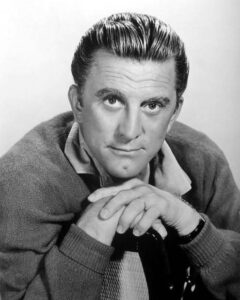
Kirk Douglas passed away in 2020 at the incredible age of 103, marking the true end of an era. He was one of the very last surviving titans of Hollywood’s Golden Age and a proud member of the Greatest Generation. From a penniless boy selling rags on a horse-drawn cart to a global icon who altered the history of American cinema, his life was the ultimate embodiment of the American Dream. He proved to the world that with raw grit, fierce loyalty, and an unbreakable spirit, a man can conquer any obstacle and leave behind a legacy that time can never erase.
Leave a Reply