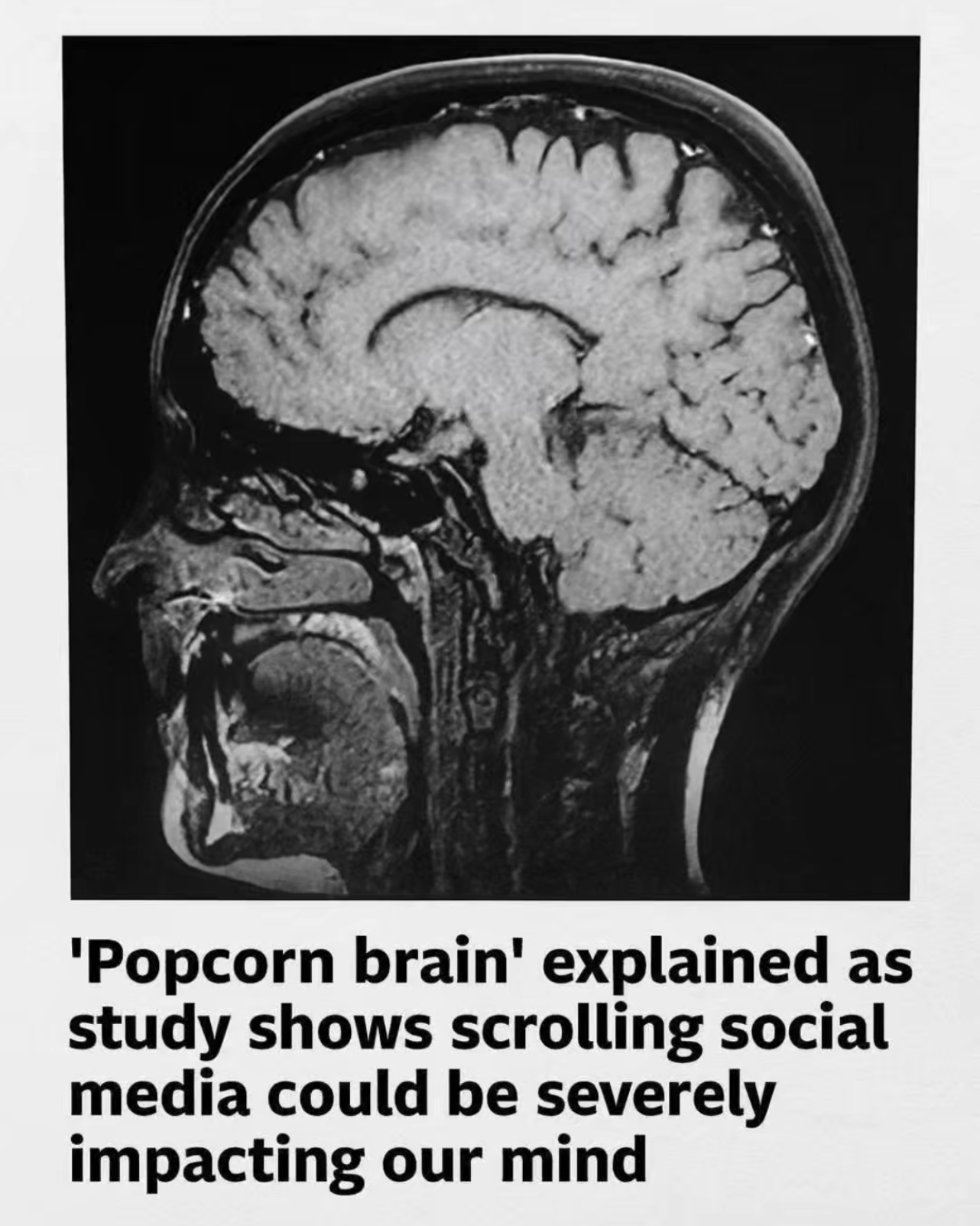
A new scientific report has raised concerns about a phenomenon known as “popcorn brain”, a term used to describe how constant exposure to fast-paced digital content may be altering the way our minds function. See more…
Researchers say that the endless stream of short-form videos, rapid notifications, and algorithm-driven content found on platforms like TikTok, Instagram, and Facebook can overstimulate the brain’s reward system. Over time, this may make it harder for people—especially young users—to focus on slower, real-life activities that require patience and sustained attention.
According to experts, the brain begins to adapt to high-speed stimulation, craving the same quick bursts of excitement it gets from scrolling. This can lead to reduced concentration, increased restlessness, and difficulty staying engaged with tasks such as studying, reading, or working.
Neurologists involved in the study explain that this shift doesn’t happen overnight, but rather through long-term exposure to digital “micro-dopamine hits” that train the brain to prefer instant gratification. While the effects are not irreversible, professionals warn that ignoring the signs may contribute to long-term attention problems for many users.
The researchers behind the study emphasize that social media is not inherently harmful, but balance is essential. They recommend taking regular digital breaks, setting screen-time limits, and choosing content intentionally instead of mindlessly scrolling.
As the digital world continues to evolve faster than our biological brains can adapt, understanding the impact of technology on mental health is becoming more important than ever.
Leave a Reply