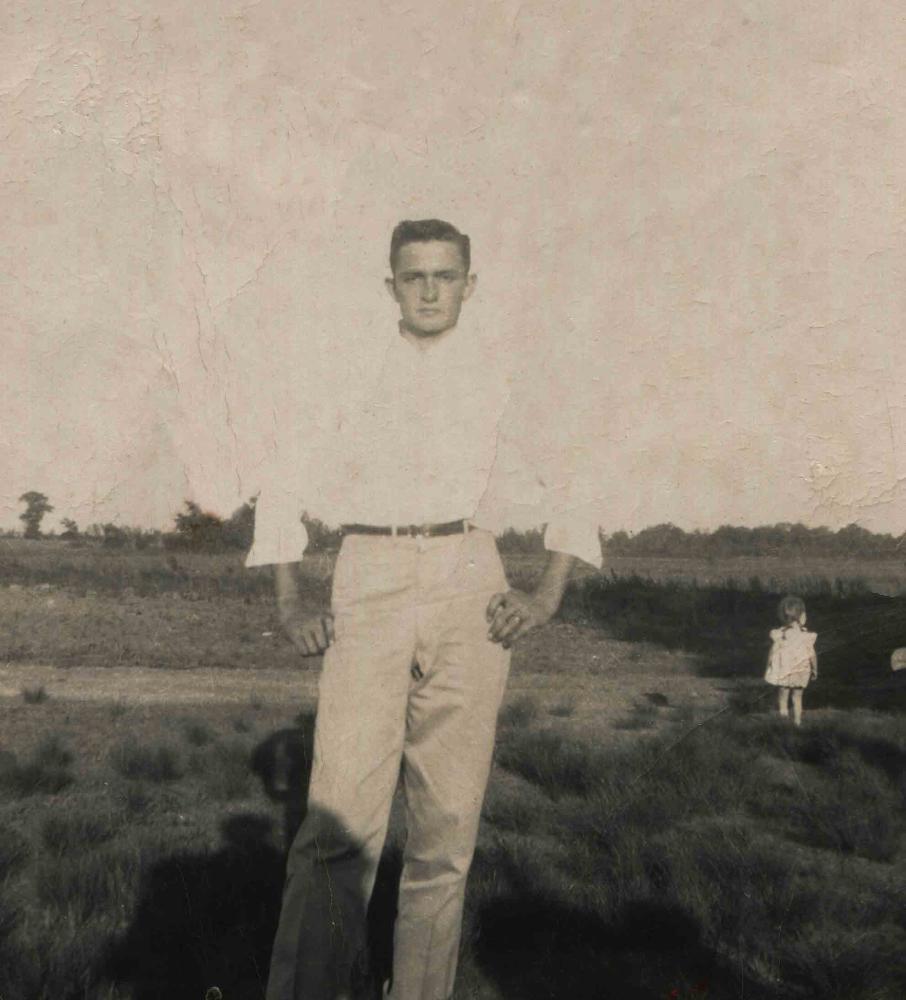
On February 26, 1932, John R. Cash was born in Kingsland, Arkansas. Decades later, the world would know him simply as Johnny Cash. He grew up in Dyess, Arkansas, in a family of farmers who worked hard to make a living. From a young age, music became an important part of his life.See more…
As a boy, Cash worked alongside his family in the cotton fields. At home, he listened to gospel music, while the radio introduced him to country performers and the sounds coming from the Grand Ole Opry. Those early songs would stay with him for the rest of his life.
Before becoming famous, Cash served in the U.S. Air Force. While stationed in Germany, he began writing songs and developing the musical style that would eventually make him famous. Some of the ideas that later became songs such as “Folsom Prison Blues” began during these early years.
After returning to the United States in 1954, Cash moved to Memphis, Tennessee. At first, he worked as a salesman, but his real dream was music. He began performing with Luther Perkins and Marshall Grant, and together they started building a reputation around Memphis.
His big break came when he auditioned for Sun Records, the legendary label that had also helped launch Elvis Presley. In 1955, Cash released “Cry! Cry! Cry!” and “Hey Porter.” His deep voice and unusual style immediately made him stand out.
Then came “I Walk the Line.” The song became one of the biggest hits of his career and helped transform Cash into a national star. His deep, unmistakable voice and simple but powerful style made him instantly recognizable.
By the late 1950s, Cash had moved to Columbia Records and was expanding his music beyond traditional country songs. He wrote about American history, faith, prisons, working people and those who often felt forgotten. His songs told stories rather than simply following musical trends.
Behind the success, however, Cash was struggling. During the 1960s, he battled an addiction to prescription drugs, and his first marriage eventually ended. June Carter became an important person in his life, and the two married on March 1, 1968.
One of the defining moments of Cash’s career came on January 13, 1968, when he performed for prisoners at Folsom Prison in California. The performance was recorded and became the legendary album “At Folsom Prison.” The following year, he performed another famous prison concert at San Quentin.
In 1969, “A Boy Named Sue” became one of Cash’s biggest hits. Around the same time, he reached an even larger audience through television. From 1969 to 1971, “The Johnny Cash Show” brought country, folk and rock performers into American living rooms.
Cash was never afraid to sing about people who were often overlooked. He performed for prisoners, working people, veterans and those living on the margins of society. His music often gave a voice to people whose stories were rarely heard on mainstream television or radio.
In the 1980s, Cash joined forces with Willie Nelson, Waylon Jennings and Kris Kristofferson to form The Highwaymen. Their music brought together four major figures of American country music, and their song “Highwayman” became a memorable hit.
When many artists from his generation were slowing down, Cash found another chapter in his career. In the 1990s, he began working with producer Rick Rubin and released “American Recordings.” His voice had become deeper and rougher, but that only added to the emotional power of his performances.
Near the end of his life, Cash recorded a haunting version of “Hurt,” originally written by Trent Reznor of Nine Inch Nails. Cash’s interpretation gave the song a completely different emotional meaning. The accompanying music video became one of the most remembered moments of his later career and introduced his music to a new generation.
Johnny Cash died on September 12, 2003, in Nashville, Tennessee, at the age of 71. But his story did not end there. With 13 Grammy Awards and a career spanning nearly five decades, Cash left behind a musical legacy that continues to reach people around the world. For those who grew up hearing him on the radio or watching him on television, Johnny Cash was more than a singer — he was the voice of an American generation.
Leave a Reply