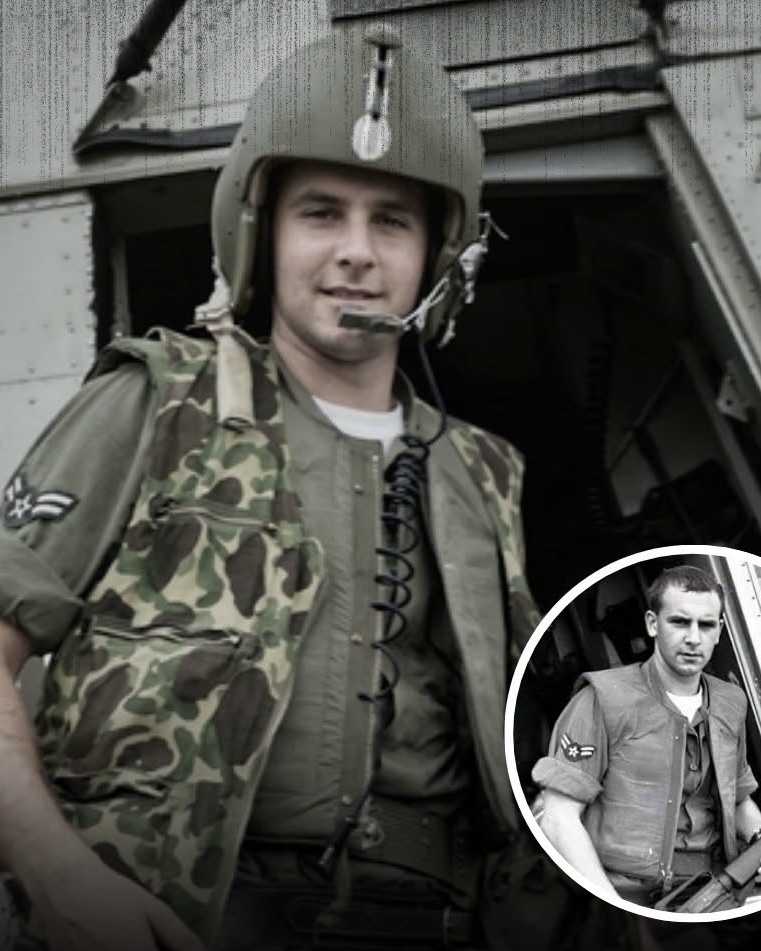
September 18 marks the birthday of the United States Air Force, founded in 1947. Every year on this day, one name comes up more than any other: Airman First Class William H. Pitsenbarger.See more…
He was born July 8, 1944, in Piqua, Ohio. He graduated Piqua High School in 1962 and enlisted soon after, training as one of the small handful of pararescuemen in the entire military — the ones who jump into the danger to pull others out of it.
By April 1966, he’d already flown more than 250 rescue missions in Vietnam. One of them earned him the Airman’s Medal, for riding a helicopter cable down into a burning minefield to save a wounded South Vietnamese soldier. He was 21 and quietly planning his exit — he’d applied to Arizona State University, hoping to become a nurse.
On April 11, near a stretch of jungle called Cam My, Charlie Company of the 2nd Battalion, 16th Infantry, 1st Infantry Division ran into an estimated 500 Viet Cong fighters. The company had just 134 men. Army helicopters couldn’t land in the triple-canopy jungle, so two Air Force “Pedro” helicopters launched from Bien Hoa instead.
Pitsenbarger volunteered to go down. He rode the hoist more than 100 feet through the trees with a medical kit, an M-16, and an armful of splints. What was waiting for him below?
He hit the ground and got to work — treating wounds, rigging litters, sending nine wounded men up the cable one at a time. Every time that cable came back down for him, he waved it off. He wanted one more man out first.
Then one of the helicopters took heavy fire and had to break away. The pilot signaled for him to climb aboard and leave. He waved them off again and stayed on the ground, alone with 134 soldiers and a jungle full of gunfire.
He gave his own pistol to a man too hurt to hold a rifle. He dragged the wounded out of the open and gathered rifles and ammunition for the men still able to fight. When Sergeant Fred Navarro went down, Pitsenbarger took off his own body armor and put it on him — then stacked what cover he could find around him.
The enemy hit the perimeter again and again. Pitsenbarger was hit three times — in the back, the shoulder, the thigh — and he kept moving anyway. How much longer could one man hold on?
A final round found him that evening. Charlie Company suffered 80 percent casualties that day, one of the costliest single engagements of its size in the entire war. Pitsenbarger’s actions are credited with helping more than 60 men make it out alive.
The Air Force awarded him the Air Force Cross that June — the first time an enlisted airman had ever received it. The men who fought beside him always believed it should have been the Medal of Honor.
Fred Navarro and other survivors spent the next three decades pushing to get the record corrected. On December 8, 2000 — 34 years after that jungle — the Air Force presented his parents with the Medal of Honor. He became the 59th airman in American history to receive it.
He remains the only pararescueman ever awarded the Medal of Honor. His name sits on the Vietnam Veterans Memorial, Panel 6E, Line 102, and he rests today in Miami Memorial Park Cemetery in Covington, Ohio, not far from where he grew up.
He was 21, weeks from going home, with a nursing career waiting for him. He stayed anyway. That’s the story — not what he was asked to do, but what he chose to do when no one would have blamed him for leaving.
Leave a Reply