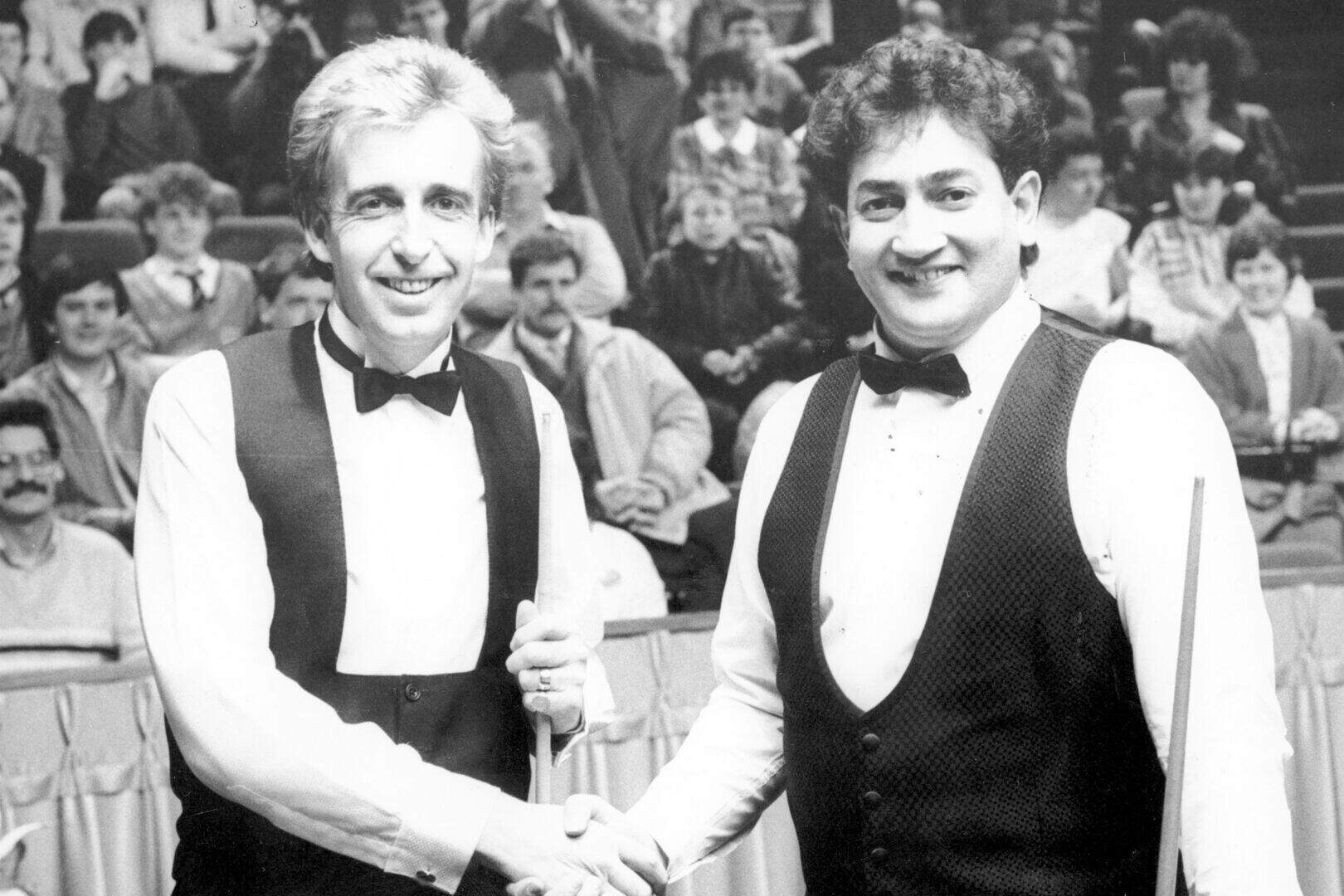
Terry Griffiths was one of the most remarkable figures in the history of snooker, a man whose journey from a working-class life in Wales to becoming a world champion captured the imagination of generations of fans. His story was about much more than trophies—it was about determination, patience and an extraordinary rise to the top.See more…
Born on October 16, 1947, in Llanelli, South Wales, Griffiths discovered snooker at a young age. Growing up in a working-class community, he never appeared destined for international sporting fame. Yet behind his quiet personality was a remarkable talent for the game.
At just 15 years old, Griffiths began working in a coal mine. Later in life, he also worked as a bus conductor, postman and insurance salesman. Throughout those years, however, snooker remained a major part of his life, and he continued developing his skills whenever he had the opportunity.
His amateur career eventually began attracting attention. Griffiths won the Welsh Amateur Championship in 1975 and later captured the English Amateur Championship in 1977 and 1978. Those achievements gave him the confidence to take the biggest step of his sporting life.
In 1978, at the age of 30, Griffiths turned professional. Just one year later, he would produce one of the greatest stories in World Championship history.
At the 1979 World Snooker Championship, Griffiths had to fight his way through the qualifying rounds simply to reach the main tournament at the Crucible Theatre in Sheffield. Few people could have predicted what would happen next.
Match after match, Griffiths continued to defeat established players. He defeated Perrie Mans in the opening round before overcoming legendary Welsh star Alex Higgins in the quarter-finals.
His semi-final against Eddie Charlton became an unforgettable battle. The match continued late into the night and finally ended around 1:40 in the morning, with Griffiths winning 19–17 and earning a place in the World Championship final.
In the final, Griffiths faced Dennis Taylor. Despite being a relatively new professional and a qualifier, he remained calm under enormous pressure and eventually won 24–16 to become the 1979 World Snooker Champion.
The victory was extraordinary. Griffiths had entered the championship through qualifying and had gone all the way to the title. He became one of the very few players in the Crucible era to accomplish such a feat.
His success continued. In 1980, Griffiths won the prestigious Masters title, defeating Alex Higgins in the final. Then, in 1982, he completed snooker’s famous Triple Crown by winning the UK Championship, again defeating Higgins in a dramatic final.
Completing the Triple Crown—World Championship, Masters and UK Championship—placed Griffiths among an exclusive group of players in snooker history. He also reached a career-high ranking of world number three and remained a top-level player for many years.
Griffiths returned to the World Championship final in 1988, nearly a decade after his famous victory. This time he faced Steve Davis, one of the dominant players of the era. Davis eventually won 18–11, but Griffiths’ return to the final confirmed his status as one of the game’s greats.
After retiring from professional competition, Griffiths became an influential coach and mentor. He worked with many elite players, including Stephen Hendry, Mark Williams, Ronnie O’Sullivan, Mark Allen, Ken Doherty and other stars of the sport. He also became a familiar voice to television audiences through his work as a snooker commentator.
Griffiths was appointed an OBE in 2007 for his contribution to snooker and was later inducted into the Snooker Hall of Fame. On December 1, 2024, Terry Griffiths died at the age of 77 following a lengthy battle with dementia. He passed away peacefully in Llanelli, surrounded by his family. His legacy lives on not only through his World Championship trophy and Triple Crown achievements, but through the countless players he coached and the generations of fans who remember the quiet Welshman who went from working in a coal mine to becoming a world champion.
Leave a Reply