In August 1967, Lyndon B. Johnson announced that the United States would send 45,000 more troops to Vietnam. Black Power activist Stokely Carmichael was calling for revolution in the streets. Beatles manager Brian Epstein died from an overdose of sleeping pills.See More…
But around water coolers across America, another question had captured the public’s imagination: What did Billie Joe McAllister and his girlfriend throw off the Tallahatchie Bridge?
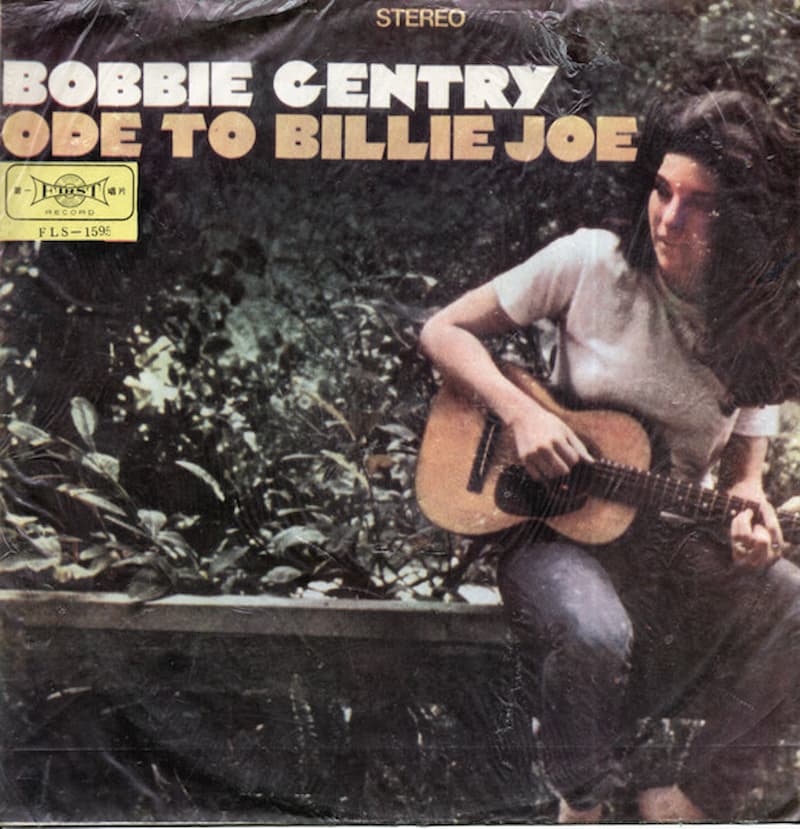
The mystery created by Bobbie Gentry in her debut single, “Ode to Billie Joe,” cast a spell over the entire country. Set against spare acoustic guitar chords and atmospheric strings, Gentry’s distinctive Southern voice tells the story of two young people from Mississippi who share a dark secret—one that ultimately leads to Billie Joe’s death.
More than five decades later, despite the vivid details in the song’s lyrics, one question remains unanswered: What exactly happened on Choctaw Ridge, and what was thrown from the Tallahatchie Bridge?
Bobbie Gentry was born Roberta Lee Streeter on July 27, 1944, in Chickasaw County, Mississippi. In the few interviews she gave throughout her career, Gentry occasionally spoke about growing up in a rural environment.
“We didn’t have electricity, and I didn’t have many playthings,” she once recalled.
What she did have was music. From the gospel sounds of the local Baptist church to traditional folk songs, Bobbie was fascinated by music from an early age.
Her grandmother noticed how much she loved music and traded one of her milk cows for a neighbor’s piano. Gentry took to the instrument immediately and wrote her first song when she was only seven years old. It was a playful tune called “My Dog Sergeant Is a Good Dog.”
After her parents divorced, 13-year-old Bobbie moved with her mother to Palm Springs, California. As the family’s financial situation improved, she taught herself to play guitar, banjo, bass and vibraphone.
As a teenager, she began performing at a local country club. She eventually adopted the stage name Bobbie Gentry, inspired by the title character of the 1952 film “Ruby Gentry.”
After graduating from high school, Gentry moved to Las Vegas, where she worked in a Folies Bergère-style revue, singing and dancing.
In the mid-1960s, she moved to Los Angeles to attend UCLA and eventually studied composition and arranging at the Los Angeles Conservatory of Music.
A demo recording she made eventually found its way to Kelly Gordon, an A&R executive at Capitol Records.
On July 10, 1967, “Ode to Billie Joe” was recorded at Studio C inside the Capitol Tower. Accompanying herself on guitar, Gentry completed a keeper take in roughly 40 minutes.
Arranger Jimmie Haskell later recalled that the original idea was simply to add some strings to the recording. At the time, no one involved expected the song to become a major hit.
The finished recording ran for more than seven minutes. Capitol edited it down to roughly four minutes and initially placed it on the B-side of “Mississippi Delta.”
But radio DJs had other ideas.
The B-side began receiving more attention than the intended A-side, and soon “Ode to Billie Joe” became the song everyone wanted to hear.
It sounded unlike anything else on the radio. Gentry’s husky, intimate voice drew listeners into a dark and mysterious Southern world, filled with unanswered questions.
Before long, one question dominated conversations across America:
What did Billie Joe and his girlfriend throw off the Tallahatchie Bridge?
Gentry herself believed the public was focusing on the wrong mystery.
She described the song as a “study in unconscious cruelty.” To her, the identity of the object thrown from the bridge was never the central point of the story.
Listeners developed their own theories. Some believed it was flowers. Others imagined a ring. Some even wondered whether it could have been a baby.
But Gentry repeatedly explained that the real meaning of the song was found in the family’s casual reaction to Billie Joe’s death.
They sit around the dinner table, eating peas and apple pie and discussing the suicide almost as if it were ordinary news. Meanwhile, Billie Joe’s girlfriend is sitting there with them—a person directly connected to the tragedy they are discussing.
That contrast, Gentry suggested, was the heart of the song.
In its first week of release, “Ode to Billie Joe” reportedly sold around 750,000 copies and quickly climbed to No. 1 on the Billboard Hot 100, eventually replacing the Beatles’ “All You Need Is Love” at the top of the chart.
The song remained at No. 1 for four weeks.
It also earned Gentry three Grammy Awards, including Best New Artist, making her the first country artist to win the award in that category.
Yet the mystery surrounding Billie Joe was eventually overshadowed by an even greater mystery: Bobbie Gentry herself.
During the early 1970s, Gentry was at the height of her career. She headlined shows in Las Vegas, recorded successful duets with Glen Campbell and hosted her own television series.
Then, around 1975, she suddenly stepped away from the public spotlight.
After contributing music to a film based on “Ode to Billie Joe,” Gentry largely disappeared from the entertainment industry.
For decades, she has declined requests for interviews, recordings and public performances. Her decision to remain out of the spotlight has only added to the fascination surrounding one of the most mysterious stars of the 1960s.
Today, “Ode to Billie Joe” remains one of the most intriguing songs of its era.
The question of what was thrown from the Tallahatchie Bridge has never been completely answered.
But according to Bobbie Gentry, perhaps that was never the most important question.
The real story was about something much darker: how ordinary people can sit around a dinner table, talking casually about tragedy, without realizing how deeply their words can affect someone sitting right beside them.
https://youtu.be/rNB8AKMdqiQ?si=E3ruqcltkHt9gEQO
Leave a Reply