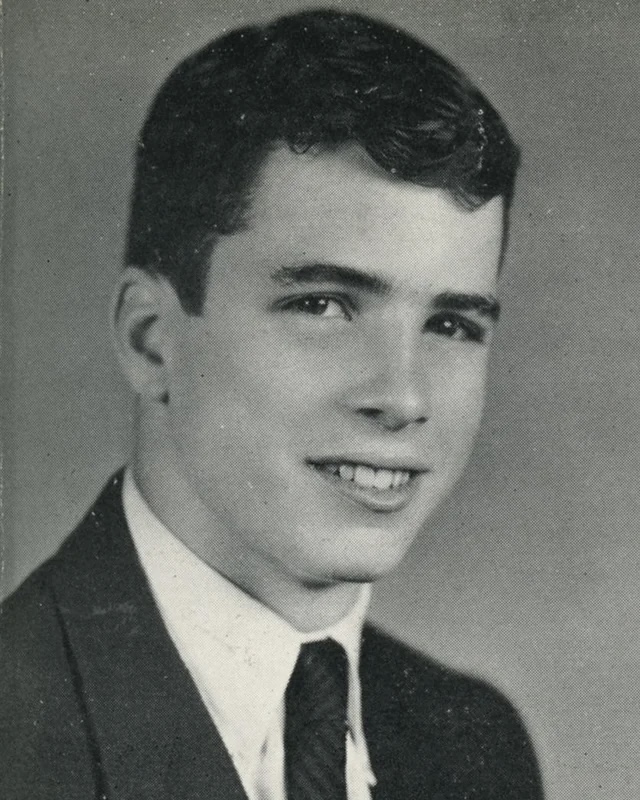
John Sidney McCain III was born on August 29, 1936, at Coco Solo Naval Air Station in the Panama Canal Zone. He came from a family with a long tradition of military service. Both his father and grandfather were four-star admirals in the United States Navy, making the military a central part of his childhood and family identity.See More…
Growing up in a military family meant that McCain moved several times during his childhood. His early years were shaped by discipline, travel, and the expectations that came with his family’s naval background. Eventually, he followed the same path as his father and grandfather and entered the United States Naval Academy.
McCain graduated from the Naval Academy in 1958 and went on to train as a naval aviator. His early military career was not without difficulties. He experienced several accidents during his years as a pilot, but he continued his service and eventually became a combat pilot during the Vietnam War.
One of the most important moments of his military career came on October 26, 1967. During his 23rd bombing mission over North Vietnam, McCain’s aircraft was shot down over Hanoi. He ejected from the aircraft and was captured by North Vietnamese forces, beginning more than five years of imprisonment.
McCain was taken to Hoa Lo Prison in Hanoi, a facility American prisoners later referred to as the “Hanoi Hilton.” He arrived badly injured after the crash and spent years in captivity under extremely harsh conditions. He was beaten, tortured, isolated, and suffered from serious physical injuries during his imprisonment.
During his captivity, McCain was offered an opportunity for an early release because his father was a senior Navy officer. He refused to leave before prisoners who had been captured before him, following the military Code of Conduct. He ultimately remained in captivity until March 14, 1973, when he was released after more than five years as a prisoner of war.
After returning to the United States, McCain continued serving in the Navy for several years. The injuries he suffered in Vietnam left lasting physical effects, but his military experience became a defining part of his public life. He later received several military decorations, including the Silver Star, Bronze Star, Purple Heart, and Distinguished Flying Cross.
McCain eventually entered politics, beginning a new chapter after his military career. He was elected to the U.S. House of Representatives in 1982, representing Arizona, and later won election to the U.S. Senate. He entered the Senate in 1987 and became one of Arizona’s longest-serving and most recognizable political figures.
Throughout his Senate career, McCain became particularly associated with military and national-security issues. He served as chairman of the Senate Armed Services Committee and frequently focused on the needs of American service members, veterans, and the armed forces. His experience as a prisoner of war strongly influenced his interest in POW and MIA issues.
His political career also included two campaigns for the presidency. In 2000, McCain won the Republican presidential primary in New Hampshire but ultimately lost the Republican nomination to George W. Bush. Eight years later, he became the Republican nominee for president in the 2008 election, facing Democratic nominee Barack Obama.
McCain’s years in public life were marked by strong political disagreements as well as periods of cooperation across party lines. He worked with lawmakers from both parties on a number of issues, while his positions on other matters generated significant political debate.
His connection to Vietnam changed significantly over the decades. After spending years as a prisoner there, McCain became involved in efforts that contributed to the normalization of relations between the United States and Vietnam. His experience as a prisoner of war remained an important part of how he approached foreign policy.
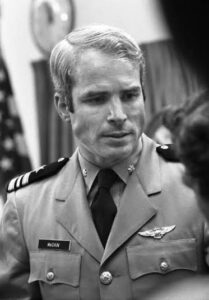
In July 2017, McCain announced that he had been diagnosed with glioblastoma, an aggressive form of brain cancer. Despite his diagnosis, he continued participating in public life for a period of time and returned to the Senate for important votes.
John McCain died on August 25, 2018, at the age of 81, at his home in Cornville, Arizona. He had spent decades in military service and public office, leaving behind a complicated and widely discussed political legacy. His life story remains closely associated with his years as a Navy pilot, his imprisonment in Vietnam, and his long career in the United States Senate.
Leave a Reply