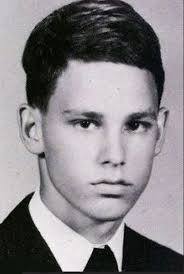
Jim Morrison was one of the most fascinating and controversial figures in rock music history. As the lead singer of The Doors, he became a symbol of rebellion, freedom, poetry, and the wild spirit of the 1960s. With his deep voice, mysterious personality, and unforgettable stage presence, Morrison helped transform rock music into something darker, more emotional, and more experimental. Although his fame made him one of the most recognizable musicians in the world, his life was filled with personal struggles, controversy, and a childhood that shaped the man he would eventually become.
James Douglas Morrison was born on December 8, 1943, in Melbourne, Florida, into a military family. His father, George Stephen Morrison, was a United States Navy officer, while his mother, Clara, raised Jim and his siblings during a childhood marked by frequent moves. Because of his father’s military career, the family lived in different places, and Morrison experienced a strict upbringing that contrasted sharply with the rebellious lifestyle he would later embrace.
As a young boy, Morrison was intelligent, curious, and fascinated by books, poetry, and philosophy. He developed a particular interest in literature and the darker side of human existence. While other children were focused on ordinary activities, Jim often immersed himself in reading and imagining strange, mysterious worlds. These early interests eventually influenced his songwriting and helped create the unusual lyrical style that made The Doors famous.
One of the most frequently discussed experiences from Morrison’s childhood involved a frightening incident he witnessed during a family road trip through the American Southwest. According to his later accounts, he saw the aftermath of a serious accident involving Native Americans on the roadside. Morrison described the experience as deeply disturbing and later incorporated similar imagery into his poetry and music. Some biographers have questioned how literally his account should be interpreted, but the story became an important part of his personal mythology.
Morrison’s relationship with his father was complicated. George Morrison represented military discipline, authority, and traditional expectations, while Jim increasingly rejected conventional rules and social structures. Their differences became more pronounced as Jim grew older and pursued a creative life rather than a traditional career. His father’s military background and strict approach to discipline contributed to the tension between them, although the full extent of their private relationship remains difficult to establish.
During his teenage years, Morrison became increasingly interested in philosophy, literature, and the works of writers such as Friedrich Nietzsche and William Blake. He attended several schools as his family moved around the country, eventually graduating from high school in Virginia. His intellectual interests were far removed from the typical image of a future rockstar, and he began to see poetry as a way to explore freedom, identity, death, and the darker aspects of human nature.
After high school, Morrison attended Florida State University before transferring to the University of California, Los Angeles, where he studied film. At UCLA, he became involved in the world of art, cinema, and experimental ideas. During this period, he began developing the poetic voice and artistic vision that would later define his music. Rather than pursuing a conventional career, Morrison dreamed of creating something that would challenge audiences and push beyond the boundaries of popular entertainment.
In 1965, Morrison’s life changed when he met keyboardist Ray Manzarek in Los Angeles. The two discovered that they shared an interest in music, poetry, and artistic experimentation. They soon formed a band that would eventually become The Doors, named after Aldous Huxley’s book The Doors of Perception. Guitarist Robby Krieger and drummer John Densmore joined the group, completing the lineup that would become one of the most influential bands of the 1960s.
The Doors gradually built a following through performances in Los Angeles clubs, where Morrison’s intense stage presence attracted attention. Their breakthrough came in 1967 with the release of their self-titled debut album, featuring the unforgettable song “Light My Fire.” The record became a major success, and Morrison quickly emerged as one of the most distinctive frontmen in rock music. His voice, poetic lyrics, and unpredictable performances made him a fascinating figure to audiences across America.
The band continued to produce influential music, including “People Are Strange,” “The End,” “Riders on the Storm,” and “Break On Through (To the Other Side).” Morrison’s songwriting often explored freedom, desire, fear, death, and the human condition. His lyrics were different from the cheerful pop songs dominating much of the music industry, and The Doors developed a darker, more theatrical sound that influenced generations of musicians. Their music remains widely recognized decades after its release.
However, Morrison’s growing fame came with serious personal difficulties. His drinking, unpredictable behavior, and confrontations during concerts frequently attracted controversy. In 1969, he was arrested following a performance in Miami, Florida, after authorities accused him of exposing himself and engaging in disorderly conduct.
Morrison denied some of the allegations, and the case became a major legal battle. In 1970, he was convicted of indecent exposure and profanity-related offenses, although he remained free while appealing the conviction. The legal controversy affected his career and added to his increasingly troubled public image.
By the early 1970s, Morrison appeared increasingly exhausted by the pressures of fame and the constant attention surrounding his personal life. He moved to Paris in 1971 with his longtime partner, Pamela Courson, hoping to focus on poetry and experience a quieter existence away from the American music industry. He continued writing and exploring his artistic interests, but his health and personal circumstances remained concerning. On July 3, 1971, Morrison was found dead in a bathtub in his Paris apartment at just 27 years old. The official cause of death was listed as heart failure, and no autopsy was performed.
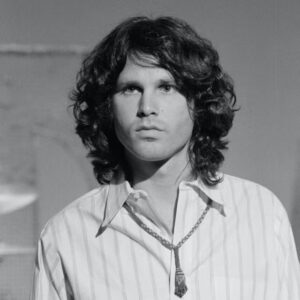
Jim Morrison’s death shocked fans around the world and transformed him into one of rock music’s most enduring legends. His grave at Père Lachaise Cemetery in Paris became a destination for admirers, while his music continued to reach new generations. More than five decades after his death, Morrison remains remembered not only as the charismatic singer of The Doors but also as a poet whose childhood experiences, intellectual curiosity, rebellious spirit, and personal struggles shaped an extraordinary and tragic life.
READ MORE
Leave a Reply