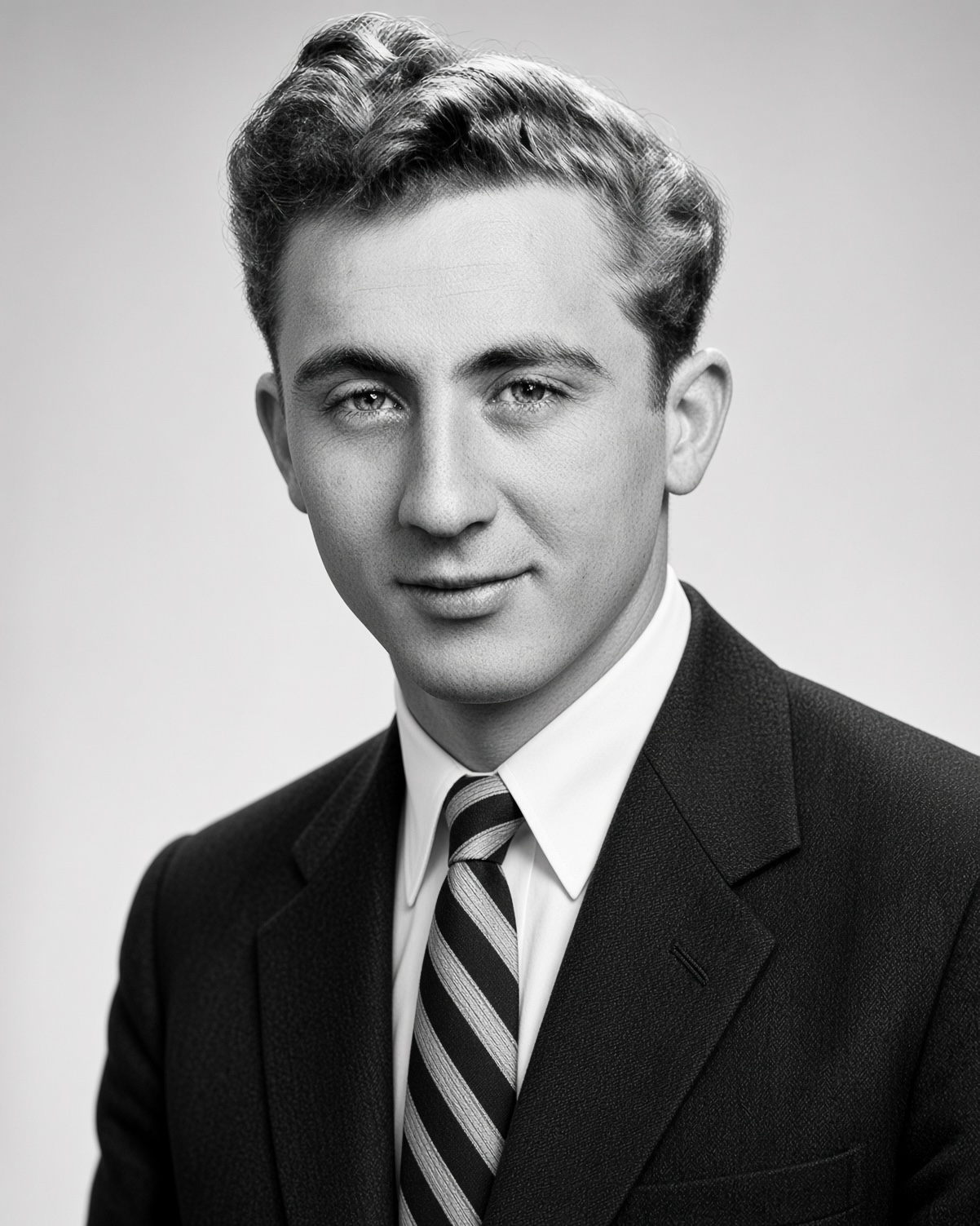
Gene Wilder was one of Hollywood’s most beloved comedic actors, but behind his gentle smile, expressive eyes, and unforgettable performances was a man whose private life held heartbreak, unexpected struggles, and secrets that many fans never knew. His journey to fame was far more complicated than the magical characters he brought to the screen.See More…
Born Jerome Silberman on June 11, 1933, in Milwaukee, Wisconsin, Gene Wilder grew up in a Jewish family far removed from the glamour of Hollywood. Although the world would eventually know him as one of comedy’s most extraordinary performers, his childhood was shaped by fear, responsibility, and a deep desire to make people happy.
One of the most painful parts of Wilder’s childhood involved his mother, Jeanne, who suffered from rheumatic heart disease. When he was only eight years old, a doctor reportedly warned him to avoid upsetting her because her condition was so serious. This left a lasting impression on the young boy, who learned to be sensitive to other people’s emotions at an unusually early age.
His first secret was the fear hiding behind his humor. Wilder later revealed that he struggled emotionally during his younger years and found it difficult to enjoy life while worrying about his mother’s health. Making people laugh became a powerful way to connect with others, but comedy was not simply a natural gift. It was also a way of navigating difficult feelings he did not always know how to express.
Wilder discovered his passion for acting as a teenager and eventually pursued formal training. He studied at the University of Iowa before traveling to England to develop his theatrical skills. He later trained at the Bristol Old Vic Theatre School, where he studied acting and fencing. His journey was not an overnight success, and he spent years working to establish himself before Hollywood recognized his talent.
Another little-known detail is that Gene Wilder was not the name he was born with. He adopted his stage name while pursuing acting, choosing Gene partly because he admired the character Eugene Gant in Thomas Wolfe’s novel Look Homeward, Angel. He selected Wilder as a tribute to playwright Thornton Wilder. The name eventually became synonymous with some of the most memorable comedy performances in cinema history.
His breakthrough came in 1967 when he appeared in Bonnie and Clyde. However, his career truly changed when he collaborated with filmmaker Mel Brooks in The Producers in 1967. Wilder played Leo Bloom, a nervous accountant who becomes involved in an outrageous theatrical scheme. His performance earned him an Academy Award nomination for Best Supporting Actor and established him as a major comedic talent.
In 1971, Wilder became a global icon when he played Willy Wonka in Willy Wonka & the Chocolate Factory. His mysterious expressions, unpredictable behavior, and strange combination of warmth and danger made the character unforgettable. One of the most interesting secrets behind the performance was Wilder’s insistence that Wonka should enter with a limp before suddenly tumbling into a somersault. He wanted the audience to question whether the character could be trusted from the very beginning.
Wilder’s success continued with films such as Blazing Saddles, Young Frankenstein, and Silver Streak. His partnership with Mel Brooks produced some of the most celebrated comedies of the 1970s. Yet Wilder was more than a performer who delivered funny lines. He was also a talented writer who helped develop stories, characters, and scenes. His work on Young Frankenstein, which he co-wrote with Brooks, demonstrated just how much creativity existed behind his innocent-looking screen persona.
Behind the laughter, however, his romantic life was complicated. Wilder married several times before finding lasting companionship with comedian Gilda Radner. The two met while working on the 1982 film Hanky Panky, and their connection eventually became one of Hollywood’s most memorable love stories. They married in 1984 and dreamed of building a family together, believing they had found a future filled with love, laughter, and happiness.
The couple’s happiness was devastated when Radner was diagnosed with ovarian cancer. Her illness brought uncertainty, fear, and heartbreaking medical struggles into their lives. Wilder stood beside her throughout her battle, but nothing could prepare him for the loss that followed. Radner died on May 20, 1989, at just 42 years old. For a man whose career had made millions laugh, the death of the woman he loved brought a grief that comedy could not erase.
One of the most revealing parts of Wilder’s private life was that his relationship with Radner was not a perfect fairy tale. In his memoir, Kiss Me Like a Stranger: My Search for Love and Art, he spoke candidly about their personalities, their difficulties, and the complicated nature of their love. He acknowledged that they could struggle together while also making clear how deeply he cared for her. His honesty revealed a side of their marriage that audiences rarely saw behind the romantic image.
After Radner’s death, Wilder devoted himself to helping raise awareness about ovarian cancer. He became an advocate for research and helped establish Gilda’s Club, a network offering support to people affected by cancer and their families. He also faced his own serious health challenge when he was diagnosed with non-Hodgkin lymphoma in 1999. Following treatment, his cancer went into remission. Later in life, he increasingly stepped away from Hollywood, choosing a quieter existence that included writing, painting, and spending time with his wife, Karen Webb, whom he married in 1991.
Gene Wilder died on August 28, 2016, at the age of 83, from complications of Alzheimer’s disease. His family explained that he had kept his diagnosis private partly to protect the magic and joy that children continued to associate with Willy Wonka. That final detail captured something essential about the man: even in his final years, he wanted to preserve happiness for others. His greatest secret may never have been a scandal or a hidden Hollywood story, but the sadness, sensitivity, and extraordinary humanity behind the smile that made the world laugh.
Leave a Reply