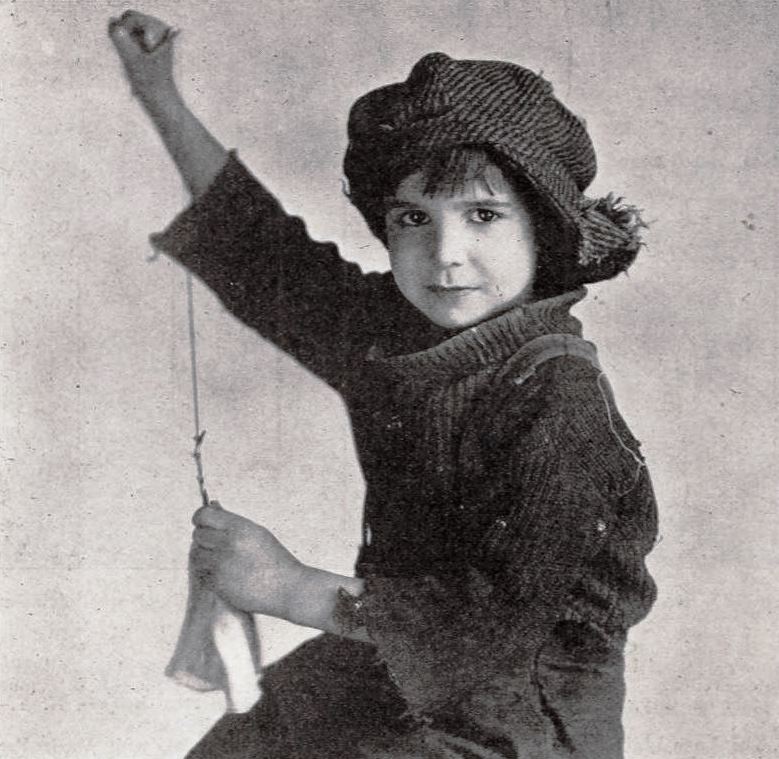
Jackie Coogan was one of Hollywood’s first major child stars, a young boy who won the hearts of millions through the silver screen. Behind his fame, however, lay a life filled with heartbreaking losses, personal struggles, and remarkable achievements. His story remains a powerful reminder that the lives of Hollywood stars are not always as glamorous as they appear.See more…
Born John Leslie Coogan on October 26, 1914, in Los Angeles, California, Jackie grew up in a family connected to the entertainment industry. His father performed on stage, while his mother also had experience in acting. From an early age, Jackie was surrounded by performance, music, and the world of show business.
His acting career began when he was still very young. In 1917, he appeared in the film Skinner’s Baby. It was a small role, but it marked the beginning of a career that would eventually make him one of the most recognizable child actors in American cinema.
Jackie’s life changed when his talent caught the attention of legendary comedian Charlie Chaplin. The young boy had a natural gift for facial expressions, comedy, and emotional acting. Chaplin recognized his potential and gave him an opportunity that would transform his future.
In 1921, Jackie appeared alongside Chaplin in The Kid. He played an abandoned child who was taken in and raised by Chaplin’s Tramp character. The film combined comedy with poverty, separation, and emotional storytelling. Jackie’s performance touched audiences and helped make the movie a classic of silent cinema.
The success of The Kid turned Jackie Coogan into an international star when he was only about seven years old. Audiences admired his natural acting and ability to express genuine emotion without speaking. During an era when silent films dominated movie theaters, his face became one of Hollywood’s most recognizable.
Following that success, Jackie appeared in several films, including Peck’s Bad Boy, My Boy, and Old Clothes. In 1922, he also starred in Oliver Twist, based on Charles Dickens’s famous novel. He was no longer simply the child who had appeared with Chaplin. He had become a major young star in his own right.
Jackie’s popularity extended far beyond movie theaters. His image appeared on toys, dolls, clothing, and other children’s products. He became one of the early examples of a celebrity whose name and image could be turned into a commercial brand. Yet behind that success was a serious question about who controlled the money he earned.
As Jackie grew older, he faced the difficult transition from child star to adult actor. The roles that had made him famous were no longer suitable for his age, and Hollywood did not always offer former child stars an easy path forward. His career changed as he struggled to find his place in an industry that had once celebrated him as a boy.
In May 1935, Jackie experienced a devastating personal tragedy. He was involved in a serious automobile accident in California that killed his father and his friend, actor Junior Durkin. Jackie was the only survivor. Losing his father was a heartbreaking blow during an already uncertain period of his life.
His difficulties did not end there. When Jackie investigated what had happened to the money he had earned as a child, he discovered that much of his fortune had been spent. Despite earning substantial sums from his films and celebrity status, he did not have the financial security he had expected from years of successful work.
In the late 1930s, Jackie took legal action against his mother and stepfather, Arthur Bernstein, in an effort to recover his earnings. The case attracted widespread public attention and raised an important question: should children who earn money in the entertainment industry have legal protection over their income?
His legal battle helped inspire legislation in California in 1939 known as the Coogan Law. The law established financial protections for child performers’ earnings. Although it could not undo Jackie’s personal losses, his experience helped bring attention to the need to protect young actors from losing the money they worked so hard to earn.
Jackie’s personal life also included several marriages. He married actress Betty Grable in 1937, but they divorced in 1939. He later married Flower Parry and Ann McCormack. In 1952, he married Dorothea Lamphere, with whom he built a family. He had four children during his lifetime.
When the United States entered World War II, Jackie chose to serve his country. He enlisted in the military in 1941 and later served in the U.S. Army Air Forces. For someone who had grown up surrounded by cameras and applause, joining the military represented a remarkable change of direction.
During the war, Jackie served as a military glider pilot with the 1st Air Commando Group during the Burma campaign, in what is now Myanmar. In 1944, glider operations helped transport Allied troops behind Japanese lines. It was dangerous work, far removed from the glamour and excitement of Hollywood.
After the war ended, Jackie returned to acting, but rebuilding his career was not easy. He took supporting roles in films and began appearing on television. Although he was no longer the child star who had captivated audiences in the 1920s, he continued working and adapting to a changing entertainment industry.
Television offered him another opportunity to connect with audiences. Jackie appeared in various programs and series, demonstrating that he could perform different kinds of roles. For viewers who remembered him from silent films, seeing him again on television introduced a new chapter in his career.
In 1964, Jackie landed the role that would make him unforgettable to another generation: Uncle Fester on The Addams Family. With his bald head, expressive eyes, unusual appearance, and eccentric humor, he created a character that became a memorable part of American television history. The series ran from 1964 to 1966.
For many viewers, especially those who watched American television during the 1960s, Uncle Fester remains Jackie Coogan’s most recognizable character. Yet behind the funny and eccentric figure was a man who had experienced childhood fame, the loss of his father, financial struggles, and military service. His real life was far more complicated than the character audiences saw on television.
Jackie Coogan died on March 1, 1984, in Santa Monica, California, at the age of 69. He was buried at Holy Cross Cemetery in Culver City. His passing marked the end of a life that had spanned several eras of American entertainment, from silent movies to classic television.
Today, Jackie Coogan is remembered as one of Hollywood’s first great child stars, the young actor who moved audiences in The Kid, the serviceman who served during World War II, and the unforgettable Uncle Fester who continues to entertain generations of viewers. His story reminds us that fame can hide deep personal pain, but an artist’s legacy can live on for decades.
Rest in Peace, Jackie Coogan. 🖤
Do you remember Jackie Coogan as Uncle Fester on The Addams Family? Share your memories of this Hollywood legend in the comments.
Leave a Reply