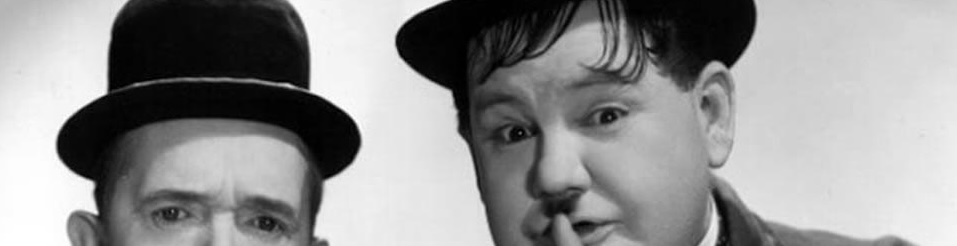
1. Two Names That Became Hollywood History
For millions of people around the world, the names Stan Laurel and Oliver Hardy bring back memories of laughter, unforgettable movie scenes, and the golden age of cinema. Known as Laurel and Hardy, the legendary comedy duo became one of the most successful partnerships in film history. Their funny expressions, endless misunderstandings, and perfectly timed performances entertained generations of families. But behind the laughter were two real men whose lives were filled with challenges, hard work, disappointments, and an extraordinary friendship.See more…
2. Stan Laurel’s Childhood in England
Stan Laurel was born Arthur Stanley Jefferson on June 16, 1890, in Ulverston, Lancashire, England. He grew up in a theatrical family. His father, Arthur Jefferson, was an actor, writer, and theater manager, while his mother, Margaret Metcalfe, was also connected to the stage. From an early age, Stan was surrounded by performers, theaters, and the world of entertainment. Although he would eventually become famous across America, his journey began in the small towns and theaters of England.
3. The Young Boy Who Dreamed of Making People Laugh
Stan showed an interest in performing when he was still a child. He made an early stage appearance as a young boy and eventually developed his talent in music halls and theatrical performances. At around 16, he was already working professionally in entertainment. He joined Fred Karno’s comedy troupe, where he gained valuable experience performing in front of live audiences. One of his fellow performers was a young Charlie Chaplin, and Stan even served as Chaplin’s understudy. Few could have imagined that he would one day become an international comedy legend himself.
4. Oliver Hardy’s Difficult Beginning in Georgia
Oliver Norvell Hardy was born on January 18, 1892, in Harlem, Georgia, USA. His childhood was very different from Stan’s. His father died when Oliver was only about ten months old, leaving his mother, Emily, to raise their family. She worked hard to support her children and managed boardinghouses in several Georgia communities. As a young boy, Oliver developed a love for music and singing. He participated in local theatrical performances and gradually discovered that entertaining people was something he truly enjoyed.
5. The American Boy Who Fell in Love With Cinema
Before becoming an actor, Oliver developed a fascination with movies. He eventually became involved in the operation of a movie theater in Georgia. Watching performers on the screen inspired him to try acting himself. In 1913, he moved toward a career in entertainment, and by 1914 he had begun appearing in films. During his early career, he was often known as Babe Hardy. He appeared in numerous silent comedies, slowly building the experience that would eventually make him one of the most recognizable faces in cinema.
6. Two Separate Journeys Toward the Same Dream
For years, Stan and Oliver worked independently in the film industry. Stan appeared in silent comedies, wrote material, and even directed films. Oliver also appeared in many comedy productions, often playing supporting characters. Neither man became an overnight sensation. They spent years learning how to entertain audiences, understanding timing, physical comedy, and the importance of facial expressions. Their individual experiences would eventually become the foundation of one of the greatest partnerships in movie history.
7. The Meeting That Changed Comedy Forever
Their paths crossed during the 1920s at Hal Roach Studios in Hollywood. They had appeared in the same film, The Lucky Dog, as early as 1921, but they were not yet an official comedy team. In 1926 and 1927, they increasingly appeared together. Producer Hal Roach and director Leo McCarey recognized the special chemistry between them. In 1927, they began working as an official duo, creating the characters audiences would soon recognize around the world. It was a partnership that would change their lives forever.
8. The Birth of Laurel and Hardy
Their first official film as a team was Putting Pants on Philip, released in December 1927. The contrast between the two performers immediately became part of their appeal. Stan played the innocent, confused, and often mischievous character, while Oliver portrayed the more serious, confident man who constantly found himself frustrated by his partner’s mistakes. Their expressions, gestures, and perfectly timed reactions made even the simplest situations hilarious. They had discovered a style of comedy that audiences could understand without needing complicated dialogue.
9. The Silent Film Era Made Them International Stars
During the late 1920s, Laurel and Hardy became increasingly popular through silent comedy films. Their humor was physical, visual, and universal. A collapsing ladder, a broken chair, or a simple misunderstanding could turn into an unforgettable comic disaster. Their performances crossed language barriers, allowing audiences in different countries to enjoy their films. At a time when cinema was rapidly changing, the duo managed to establish themselves as two of its most beloved performers.
10. The Challenge of Moving Into Talking Pictures
When Hollywood began moving from silent films to movies with synchronized sound, many performers struggled to adapt. Laurel and Hardy, however, successfully made the transition. Their first sound film together, Unaccustomed As We Are, appeared in 1929. Their voices, dialogue, and famous expressions added another dimension to their comedy. Oliver’s distinctive voice and Stan’s gentle, confused delivery became essential parts of their performances. Rather than losing their popularity, they found a new generation of fans.
11. The Music Box and an Academy Award
In 1932, the duo starred in The Music Box, one of their most celebrated short films. The story follows the two men as they struggle to carry a piano up an enormous flight of stairs. What should have been a simple delivery becomes a series of increasingly ridiculous disasters. The film became a classic and won the Academy Award for Best Short Subject, Comedy, at the 1932–33 ceremony. It remains one of the most recognizable examples of their extraordinary physical comedy.
12. The Films That Became Part of American Nostalgia
Throughout the 1930s, Laurel and Hardy appeared in numerous successful productions, including Sons of the Desert, Way Out West, Babes in Toyland, Our Relations, and The Bohemian Girl. Their characters became familiar visitors in American homes and movie theaters. During the difficult years of the Great Depression, their comedy offered audiences an opportunity to forget their problems and laugh together. Their films became part of the entertainment memories of an entire generation.
13. Behind the Scenes, Stan Was Much More Than an Actor
One of the most interesting details about Stan Laurel is that he contributed far more to their films than many viewers realized. He helped develop stories, comedy routines, and visual jokes. He understood how to build a scene and how to make a simple mistake become a memorable moment. He often worked closely with the directors and other members of the production team. His creative contribution was so important that their films were not simply performances by two actors; they were carefully developed comedy productions.
14. Their Friendship Beyond the Cameras
Although their characters frequently argued and blamed each other on screen, their real relationship was built on years of working together. They developed a deep professional bond and understood each other’s comic timing remarkably well. Stan once described their partnership as something that came together naturally. Their different personalities and appearances helped create the perfect balance. They were not simply two comedians sharing a scene; they had become an inseparable part of each other’s professional lives.
15. The Difficult Years and Changing Hollywood
As the 1940s arrived, the entertainment industry began changing. Laurel and Hardy left Hal Roach Studios and worked with larger companies, including Twentieth Century-Fox and MGM. However, the new studio system did not always allow them the same creative freedom they had enjoyed before. They were sometimes given weaker scripts and fewer opportunities to develop their own comedy routines. Their later films did not always receive the same enthusiasm as their earlier classics. After The Bullfighters in 1945, they largely stepped away from Hollywood filmmaking.
16. The Final European Tours
Even after their major film careers slowed down, Laurel and Hardy continued performing for audiences. They toured Europe in 1947 and returned for further tours in the early 1950s. Their appearances attracted devoted fans who still wanted to see the two legendary comedians in person. However, traveling and performing became increasingly difficult as they grew older. Their health was beginning to affect their ability to work, but their connection with audiences remained strong.
17. The Final Film and a Difficult Production
In 1950, they traveled to France to work on their final feature film, Atoll K, also known as Utopia. The production was extremely difficult. Both comedians experienced health problems, the filming process was complicated, and communication among the international cast and crew was challenging. Stan even had to help rewrite parts of the script. The film was released in 1951, but it did not achieve the success they had hoped for. It marked the end of their feature-film partnership.
18. Oliver Hardy’s Final Battle
In May 1954, Oliver Hardy suffered a heart attack. He began paying much closer attention to his health and lost a considerable amount of weight. Then, in September 1956, he suffered a devastating stroke that left him almost completely paralyzed and unable to speak. His beloved wife, Lucille, remained by his side and cared for him during his final illness. In August 1957, he suffered further strokes and fell into a coma. On August 7, 1957, Oliver Hardy died at the age of 65. The man who had made millions laugh was gone, leaving behind an extraordinary legacy.
19. Stan Laurel’s Heartbreaking Goodbye
Stan was deeply affected by the loss of his longtime partner. The two had shared decades of work, countless performances, and a lifetime of memories. Stan himself had suffered a stroke in 1955, although he recovered enough to continue his life. He was too unwell to attend Oliver’s funeral. When asked about his old friend, he expressed the heartbreak of losing someone who had been like a brother. After Oliver’s death, Stan never returned to performing as part of another comedy team. He continued writing, answering fan letters, and maintaining contact with admirers who visited him.
20. A Legacy That Will Never Be Forgotten
On February 23, 1965, Stan Laurel died from a heart attack in Santa Monica, California, at the age of 74. He had lived long enough to see their old films reach new audiences through television. In 1960, he received an honorary Academy Award recognizing his pioneering contributions to film comedy. Today, Laurel and Hardy remain among the most beloved comedy partnerships in cinema history. Their films continue to bring laughter to families, grandparents, parents, and children. They may have left this world decades ago, but the laughter they created has never disappeared. For millions of fans, they will always be the two gentlemen who proved that friendship, humor, and a little bit of chaos can make the world a happier place.
Leave a Reply