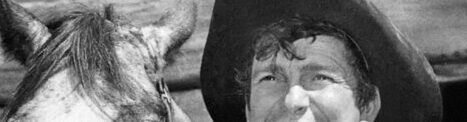
1. A Childhood in California
Slim Pickens was born on June 29, 1919, in Kingsburg, California. His real name was Louis Burton Lindley Jr. He grew up in a farming family, where hard work and caring for animals were part of everyday life. From an early age, he developed a special connection with horses and the rural lifestyle that would shape his future.See more…
2. Horses Became His First Love
Slim developed a passion for horses when he was just four years old. While other children were busy with ordinary childhood activities, he was fascinated by riding and working with animals. As he grew older, his interest turned toward rodeo, a dangerous sport where riders attempt to stay on powerful, unpredictable horses and bulls.
3. His Father Did Not Support His Dream
His father wanted him to concentrate on farm work rather than pursue a dangerous career in rodeo. But Slim had other plans. He began secretly entering competitions, sometimes going against his father’s wishes. He knew the risks, but his desire to become a rodeo performer was stronger than his fear of disappointing his family.
4. The Name That Would Become Famous
To avoid being recognized by his father, he sometimes entered rodeo competitions under different names. Eventually, someone suggested the nickname Slim Pickens as a joke about how little money he was likely to win. He liked the name and decided to keep it. Years later, that unusual nickname would become famous across America.
5. He Left School to Follow His Dream
As a teenager, Slim decided to devote himself to rodeo. He left high school and began traveling to competitions, hoping to make a living through his riding skills. It was a difficult decision, especially because he was giving up the more conventional future his family had imagined for him. But he believed he had found his calling.
6. A Profession Where Every Ride Could Be Dangerous
Rodeo was not a game. Slim faced powerful bulls, unpredictable horses, and situations where a single mistake could lead to serious injury. He became an experienced bronc rider and developed a reputation as a skilled competitor. Over time, his body would carry the physical marks of the dangerous profession he had chosen.
7. He Also Risked His Life Protecting Other Riders
Slim worked as a rodeo clown and bullfighter, too. These performers had an important job: distracting angry bulls and protecting riders who had been thrown to the ground. Wearing distinctive costumes and using their agility to draw the animals away, they often placed themselves directly in danger. Slim understood that the job required courage, quick thinking, and extraordinary timing.
8. The Physical Price of Rodeo
His years in the arena came with a terrible physical cost. He suffered falls, blows, and injuries from horses and bulls. Biographical accounts describe broken bones in his hands, legs, ribs, and back, as well as a serious chest injury. Despite the pain, he repeatedly returned to rodeo because it was more than a job to him. It was part of who he was.
9. He Once Pawned His Boots to Enter a Competition
In 1942, Slim was so determined to compete that he reportedly pawned his boots to raise the money needed to enter a rodeo in Prescott, Arizona. The story offers a glimpse into the financial struggles he faced before becoming successful. He did not have wealth, fame, or powerful connections. What he had was determination and a willingness to sacrifice almost everything for his dream.
10. World War II Changed His Plans
During World War II, Slim joined the United States Army. When a recruiter asked about his occupation, he answered that he worked in rodeo. According to the often-repeated story, the recruiter misunderstood his answer as “radio” and assigned him to a military radio station in the Midwest. He served there for the remainder of the war, putting his rodeo career on hold.
11. A Chance Encounter Opened the Door to Hollywood
After the war, Slim returned to rodeo. By then, he had developed a distinctive appearance, a deep voice, and an unmistakable Western manner. In 1950, film director William Keighley noticed him at a rodeo and gave him an opportunity to try acting. That encounter would change the direction of his life.
12. His First Movie Was with Errol Flynn
Slim made his film debut in 1950 in Rocky Mountain, starring alongside the famous actor Errol Flynn. It was the beginning of an entirely new chapter. After years of facing dangerous animals in rodeo arenas, he was now stepping in front of movie cameras. His real-life experience as a cowboy gave him something that many Hollywood actors simply could not imitate.
13. He Was a Real Cowboy on Screen
Many actors who played cowboys had little experience with horses. Slim was different. He knew how to ride, handle animals, and perform physically demanding scenes. His background made his performances feel authentic. Audiences were not simply watching an actor pretending to be a cowboy. They were watching someone who had actually lived that life.
14. He Worked Alongside Hollywood’s Biggest Stars
Throughout his career, Slim appeared in films alongside major stars such as Marlon Brando, Charlton Heston, John Wayne, and Steve McQueen. His film credits included One-Eyed Jacks, Major Dundee, Stagecoach, The Cowboys, and The Getaway. His rugged appearance and unmistakable voice made him a familiar face to generations of movie fans.
15. The Role That Made Him Famous Around the World
In 1964, Slim played Major T. J. “King” Kong in Stanley Kubrick’s Dr. Strangelove. The character’s most memorable moment came when he rode a nuclear bomb as it fell toward its target, waving his cowboy hat in the air. The scene was outrageous, darkly funny, and unforgettable. It became one of the most recognizable moments in movie history and introduced Slim to an entirely new generation of viewers.
16. Another Hit with Blazing Saddles
In 1974, Slim appeared in Mel Brooks’s comedy Blazing Saddles, playing Taggart, the leader of a group of outlaws. The film became a major success and demonstrated that Slim could be just as effective in comedy as he was in Westerns. His voice, appearance, and natural screen presence made him instantly recognizable.
17. His Career Went Far Beyond Movies
Slim did not limit himself to the big screen. He also appeared in popular television shows, including Gunsmoke, Bonanza, The Virginian, Maverick, and Hee Haw. Over the course of his career, he appeared in more than 150 film and television productions. His career continued for decades, making him one of the most recognizable character actors in American Western entertainment.
18. A Family Life Away from the Cameras
On March 22, 1950, Slim married Margaret Elizabeth Harmon. Their marriage lasted until the end of his life, and together they raised three children. Despite the demands of filming, traveling, and working in Hollywood, he maintained a connection to his family and the simpler lifestyle he had known growing up in California.
19. His Final Battle Was One He Could Not Win
In the final years of his life, Slim faced a brain tumor. After surviving decades of physical danger and serious rodeo injuries, he was confronted with a different kind of battle. He died on December 8, 1983, in Modesto, California, at the age of 64, following surgery for a brain tumor. His death marked the end of a remarkable life that had taken him from rural California to the heights of Hollywood.
20. A Legend Who Was Never Forgotten
Even after his death, Slim Pickens’s contributions to rodeo and American cinema continued to be celebrated. He was inducted into the Hall of Great Western Performers in 1982 and later received recognition from rodeo institutions, including the ProRodeo Hall of Fame. Slim Pickens was not simply an actor who played a cowboy. He had lived like one, faced real dangers, endured painful injuries, and built a career that left a lasting mark on American entertainment.
His journey from a young farm boy with a dream to one of Hollywood’s most recognizable Western performers remains an extraordinary American story.
Leave a Reply