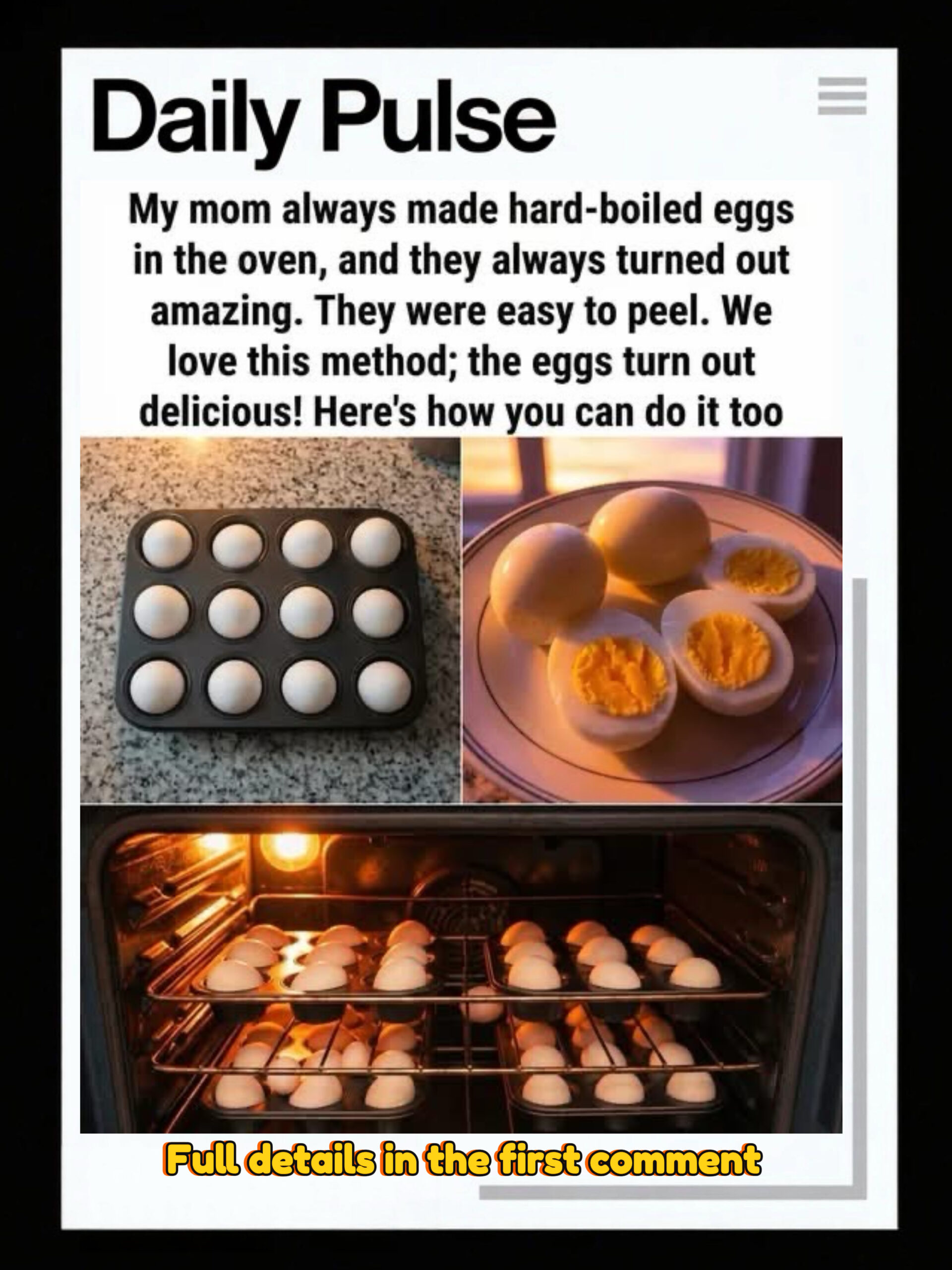
Perfecting a hard-boiled egg seems simple, yet many people discover it’s harder than expected. Shells that cling stubbornly, yolks that turn green, and inconsistent results often make stovetop boiling frustrating. These common problems are what sparked interest in trying a different approach: baking eggs in the oven. Although the method may sound unusual at first, it has steadily grown in popularity because it delivers consistent results with very little effort. Testing it alongside the traditional boiling method showed that oven-baked eggs can be surprisingly reliable, especially for anyone who prefers a more hands-off cooking experience.See more…
One of the biggest benefits of using the oven is how effortless the process becomes. There’s no pot to keep an eye on, no water splashing over the sides, and no need to adjust the heat. You simply place the eggs inside a preheated oven and let them cook while you take care of other tasks. This makes the method ideal for meal prepping, brunch gatherings, or preparing large amounts at once. While boiling works perfectly well for a few eggs, the oven is far more convenient for bigger batches and busy kitchens.
The technique itself is simple. Preheat the oven to 325–350°F, place the eggs in a muffin tin or a heatproof dish so they stay in place, and bake for about 25–30 minutes depending on your oven. While the eggs cook, prepare an ice bath. The moment they come out of the oven, transfer them into the cold water to stop the cooking and help loosen the shells. With just eggs, a muffin tray, and some ice water, you can produce eggs that peel easily and store well. Unpeeled baked eggs last up to a week in the fridge, while peeled ones are best enjoyed within a few days.
Although baking offers convenience, it does have a few drawbacks. Different ovens heat differently, so some eggs may cook at slightly different rates or develop tiny brown spots on the shells. Leaving them in too long can lead to firmer whites or slightly drier yolks, and—just like with boiling—overcooking may leave a harmless green ring around the yolk. The taste remains familiar, though the texture may vary slightly from the traditional boiled version. No matter which method you choose, the ease of peeling depends more on the age of the eggs than on the cooking style. Older eggs naturally release from their shells more cleanly. In the end, both methods work well; the choice comes down to what you prefer. For large batches and a hands-free approach, the oven is hard to beat. For quick cooking or smaller portions, boiling remains the classic go-to.
Leave a Reply